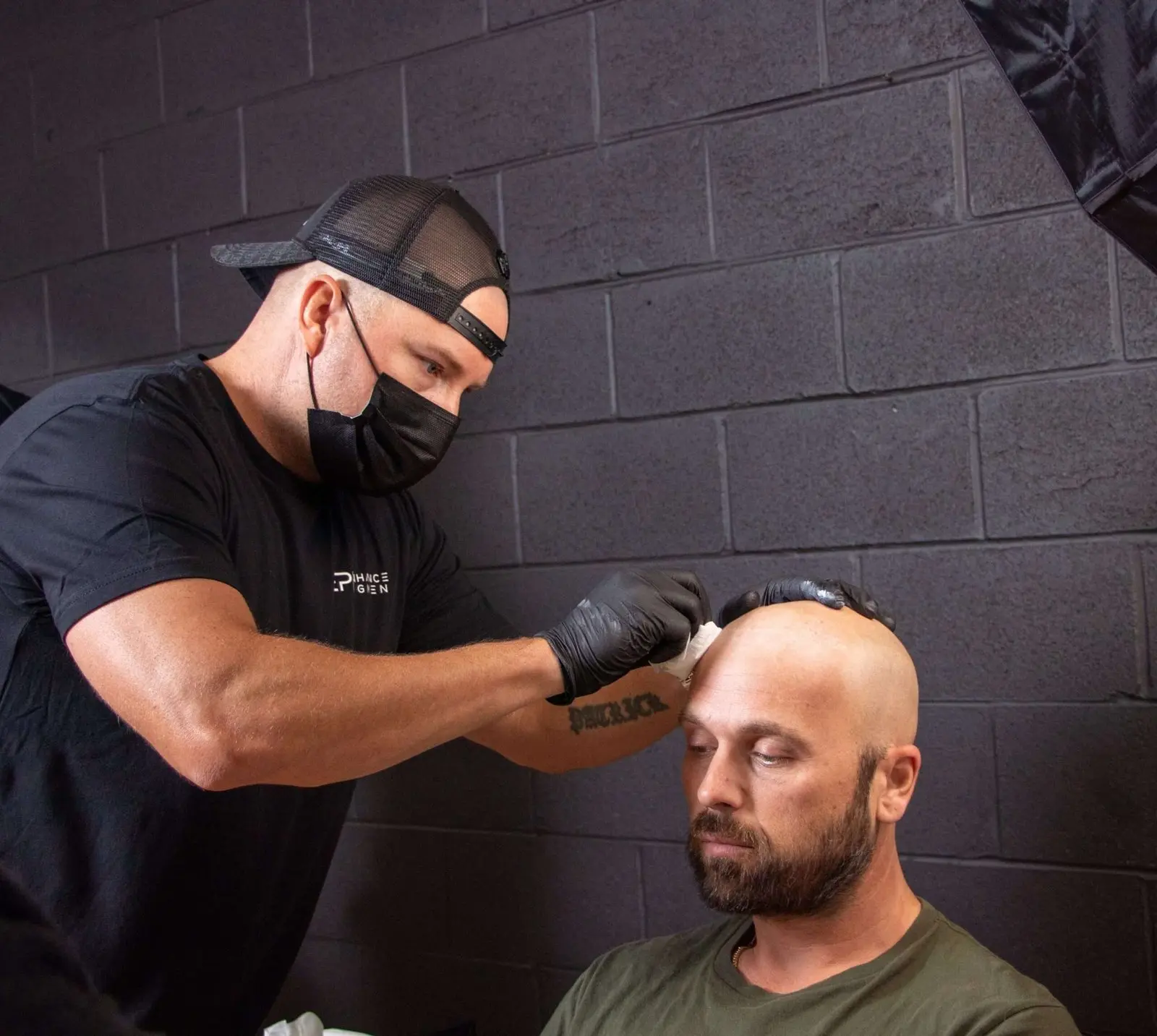
Case No. 397
Five years ago, this client had SMP performed at another clinic
Correction, hairline and density on the scalp chart
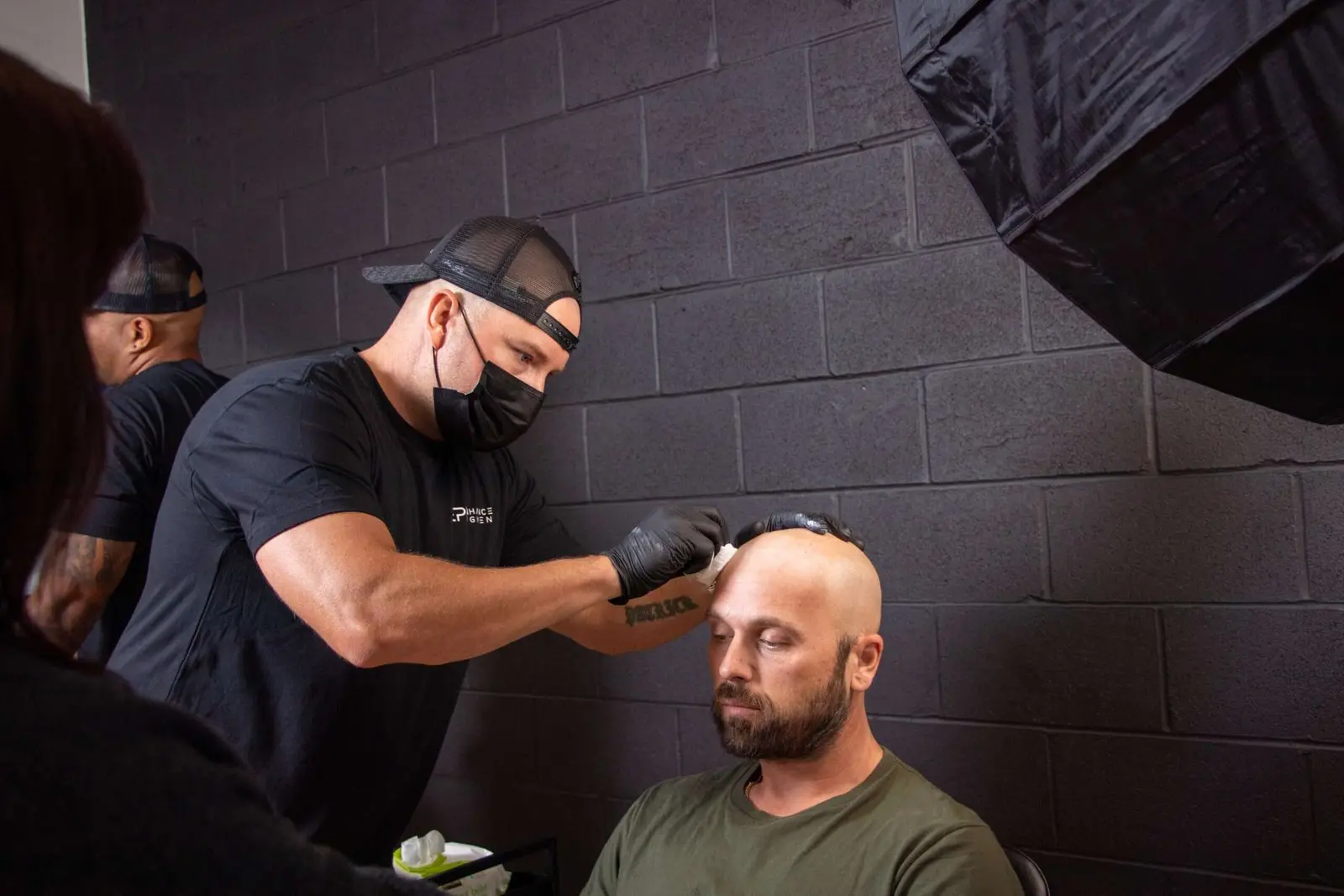
At the consultation, James sketches the area he will treat on a chart like this one.
A light refresh restores definition to healed work.
How corrective SMP works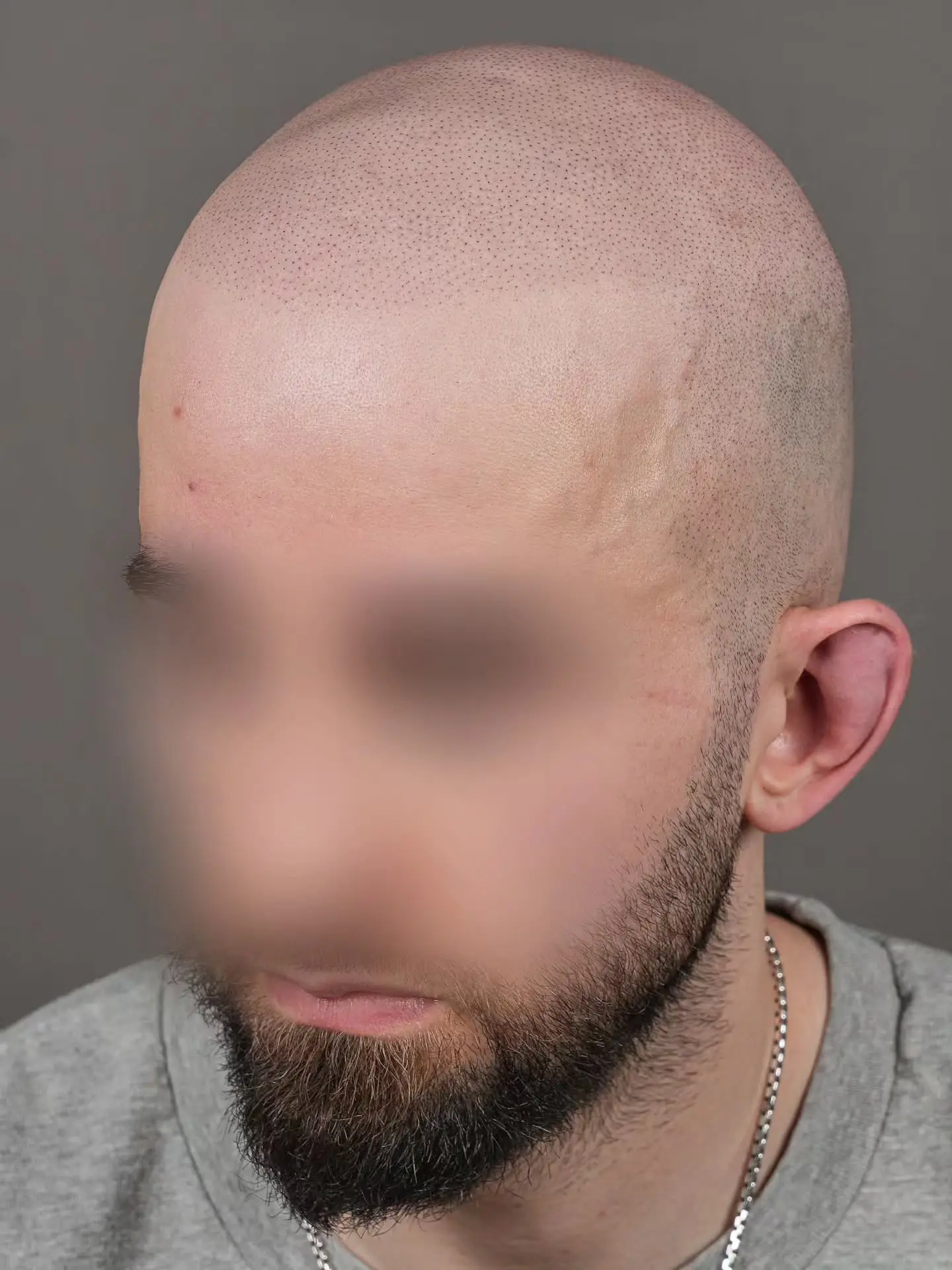
In James's words
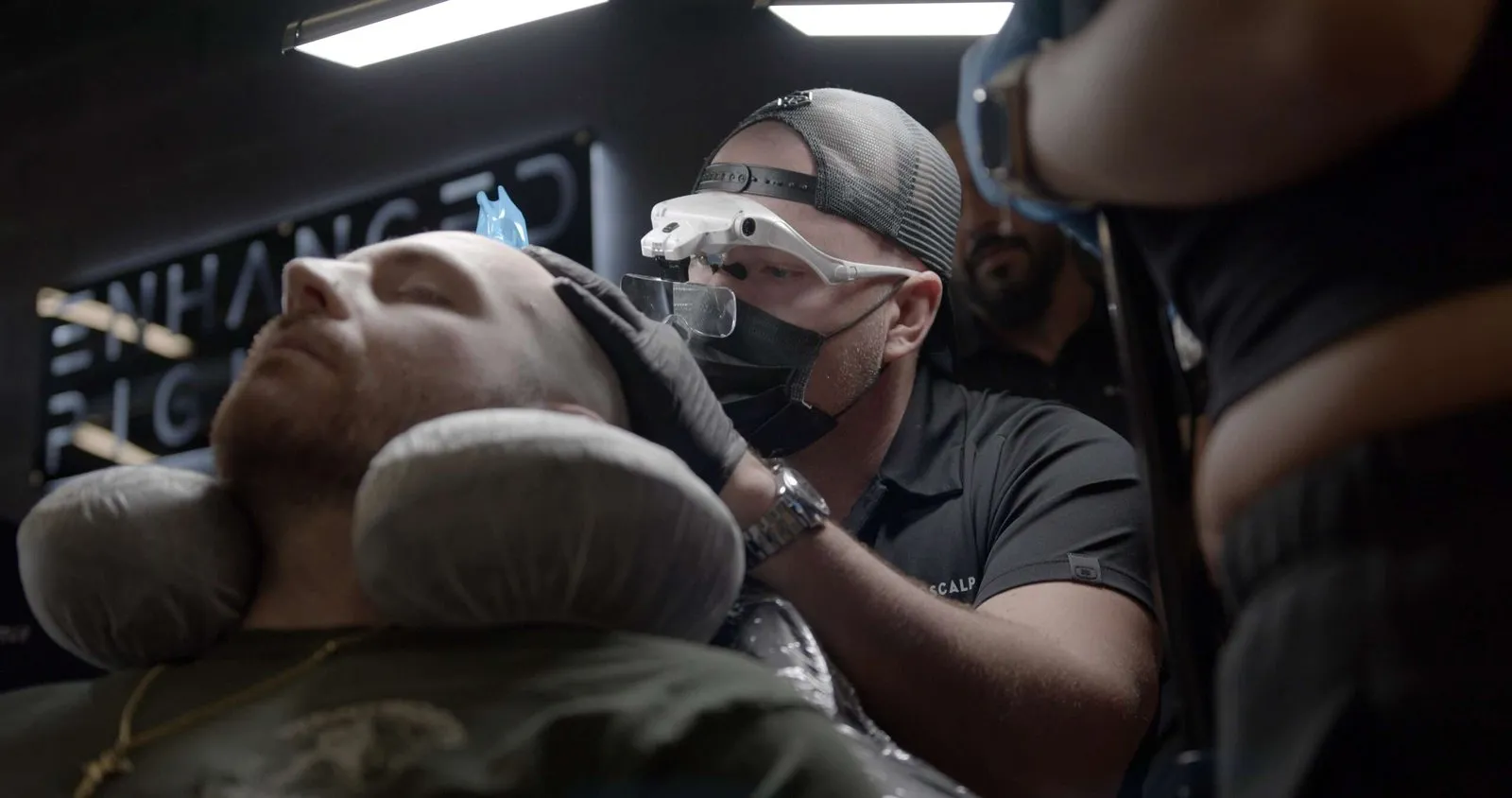
He originally came to me looking for a touch up, but during the consultation it was clear that simply adding more pigment was not the right move.
The previous work had become too saturated through the frontal area, with migration creating a darker, heavier headband effect. He also wanted a much softer hairline, and the existing temple design was noticeably uneven, with one temple brought too far forward beyond where it would naturally sit. It was something that had bothered him for years.
So instead of trying to camouflage old work with more work, we stripped it back first.
He underwent two SMP laser removal sessions, with approximately six weeks of healing between each treatment to allow the skin to recover and the fragmented pigment to continue breaking down beneath the surface.
Now we are rebuilding from a much cleaner foundation.
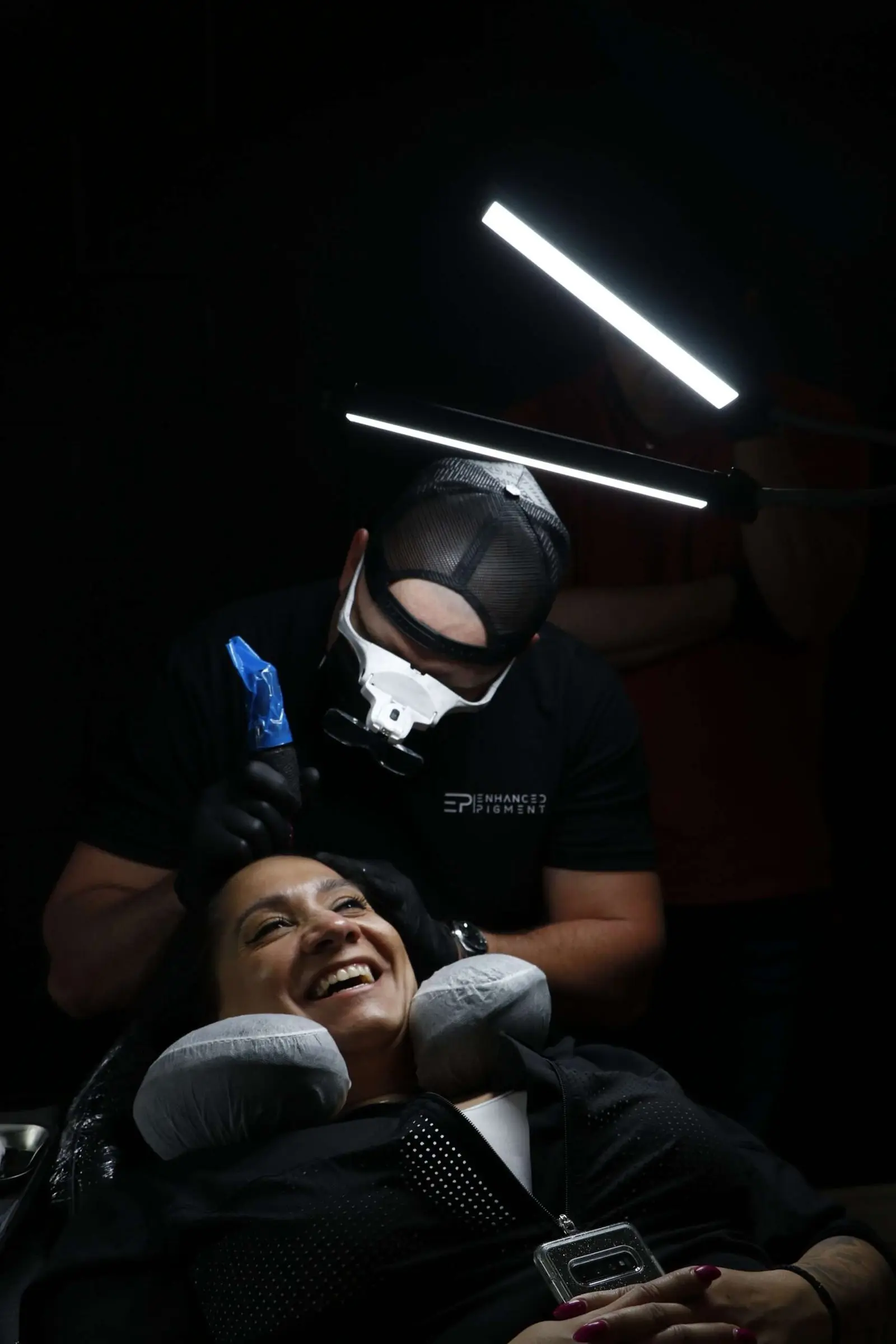
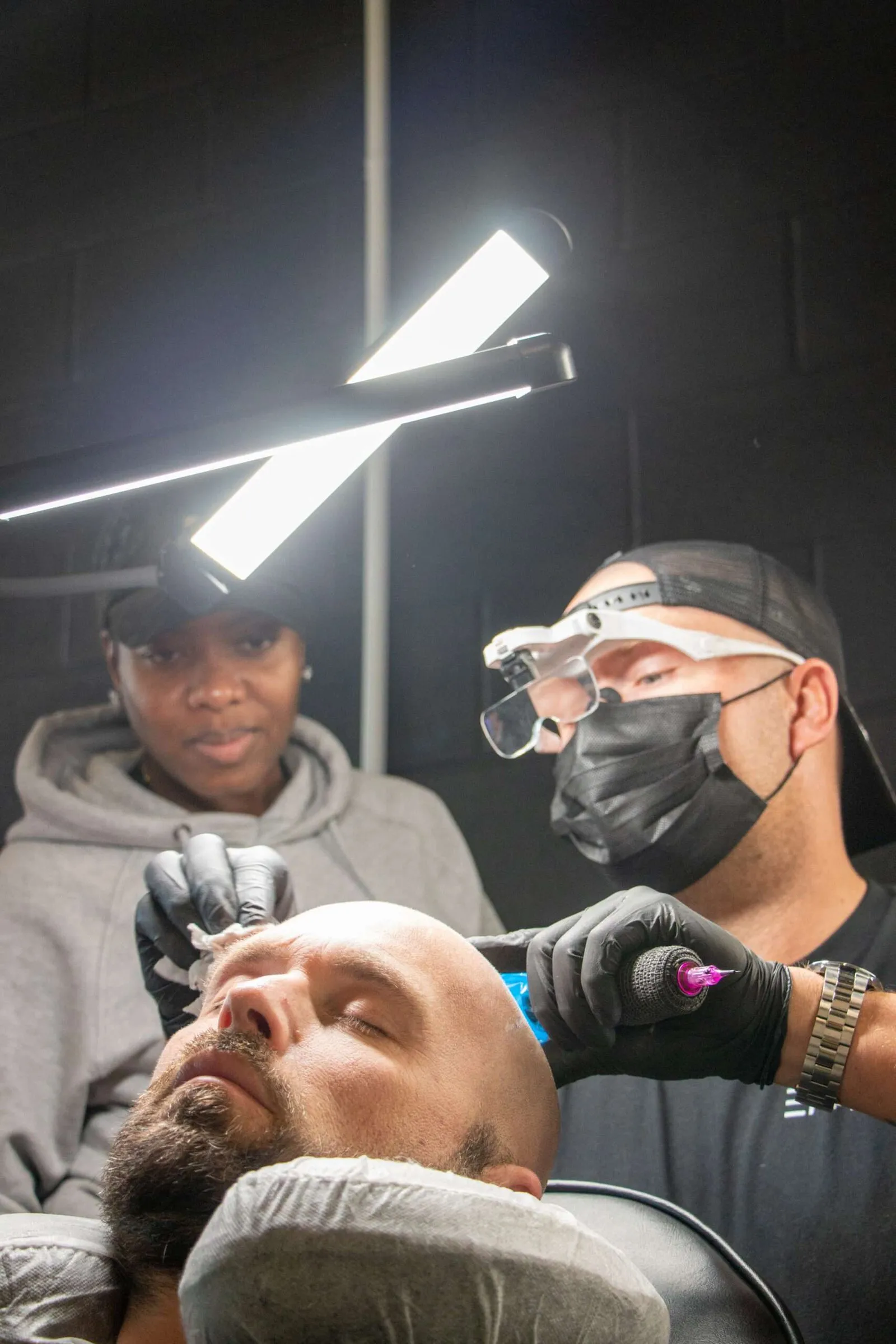
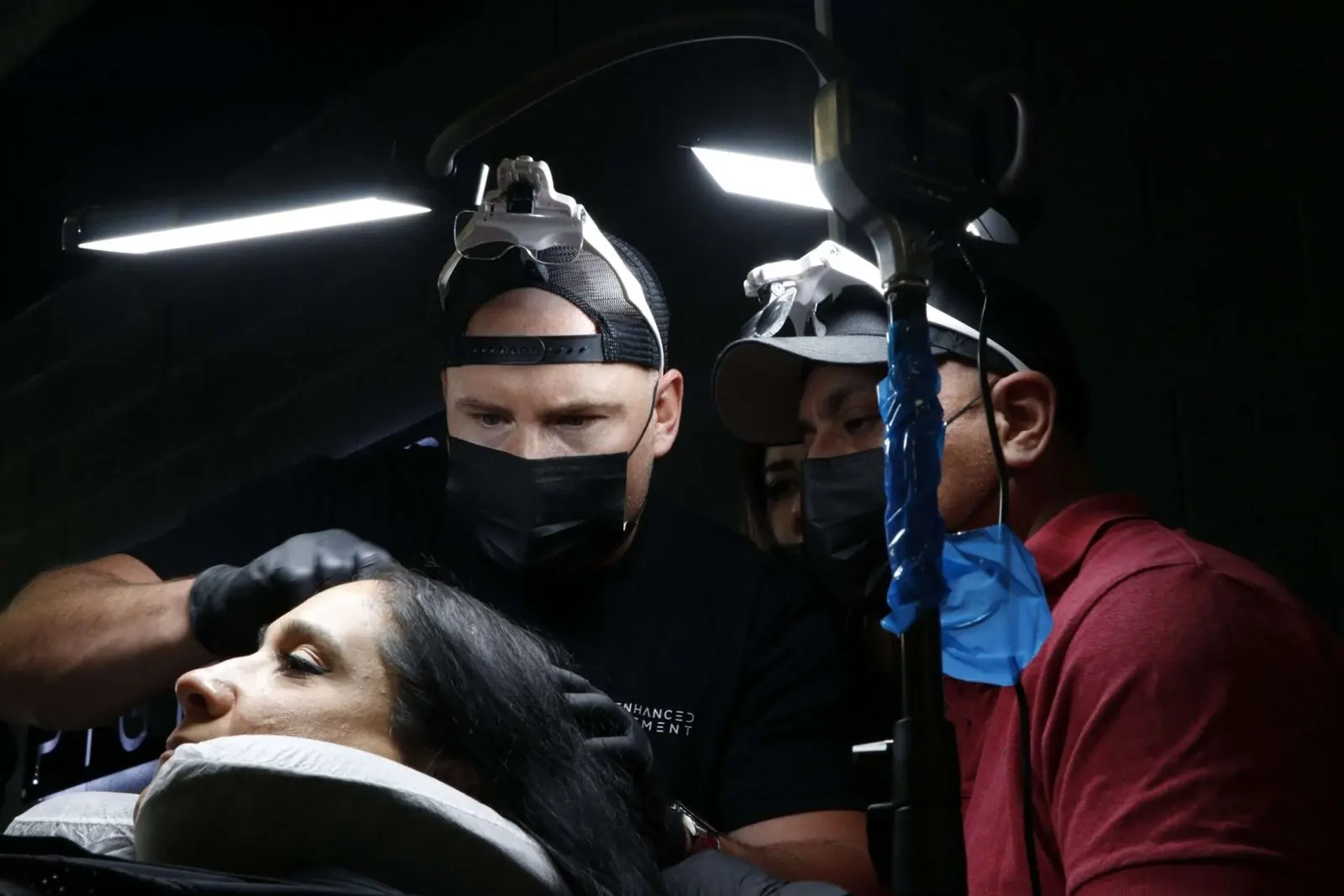
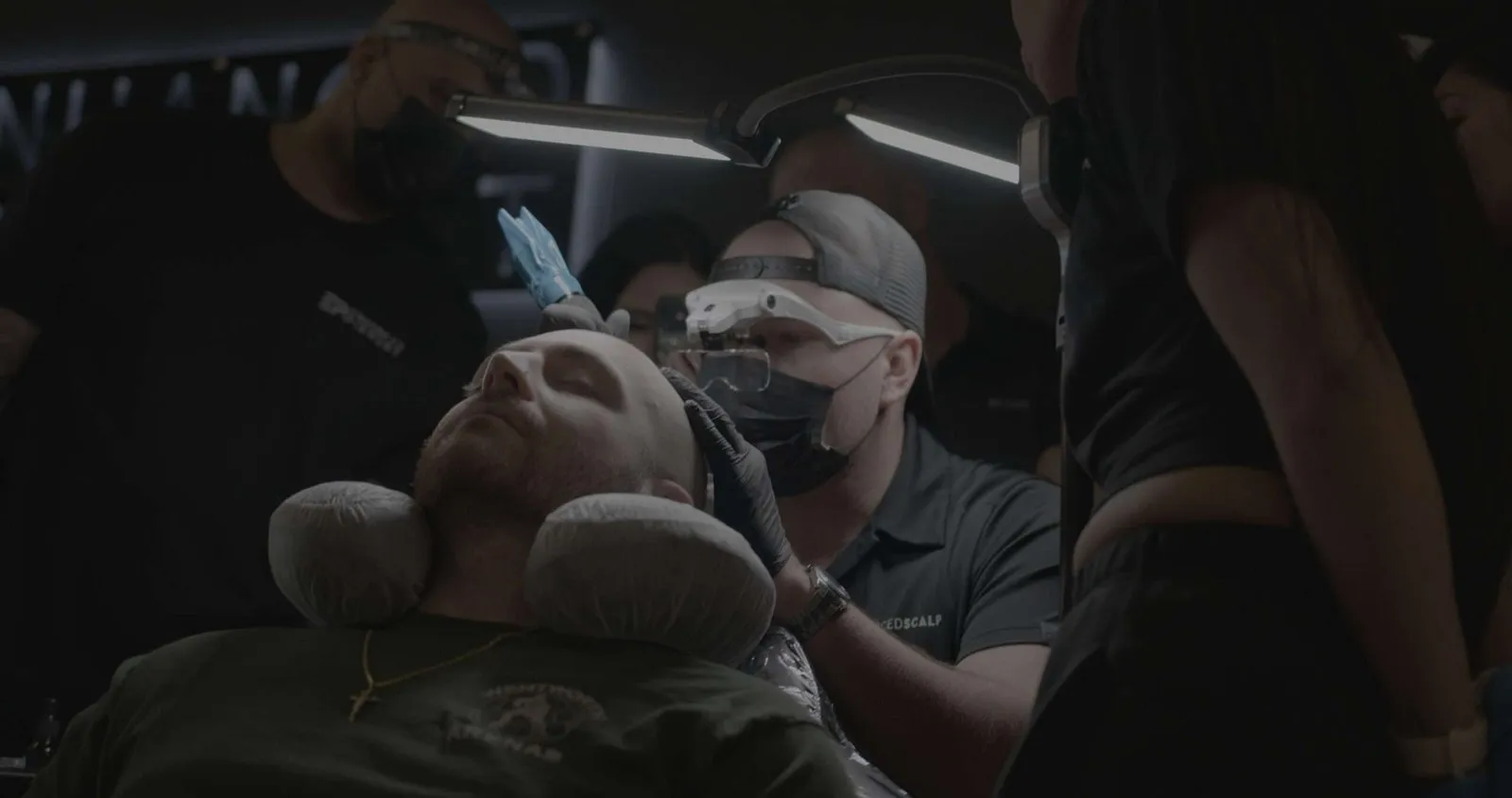
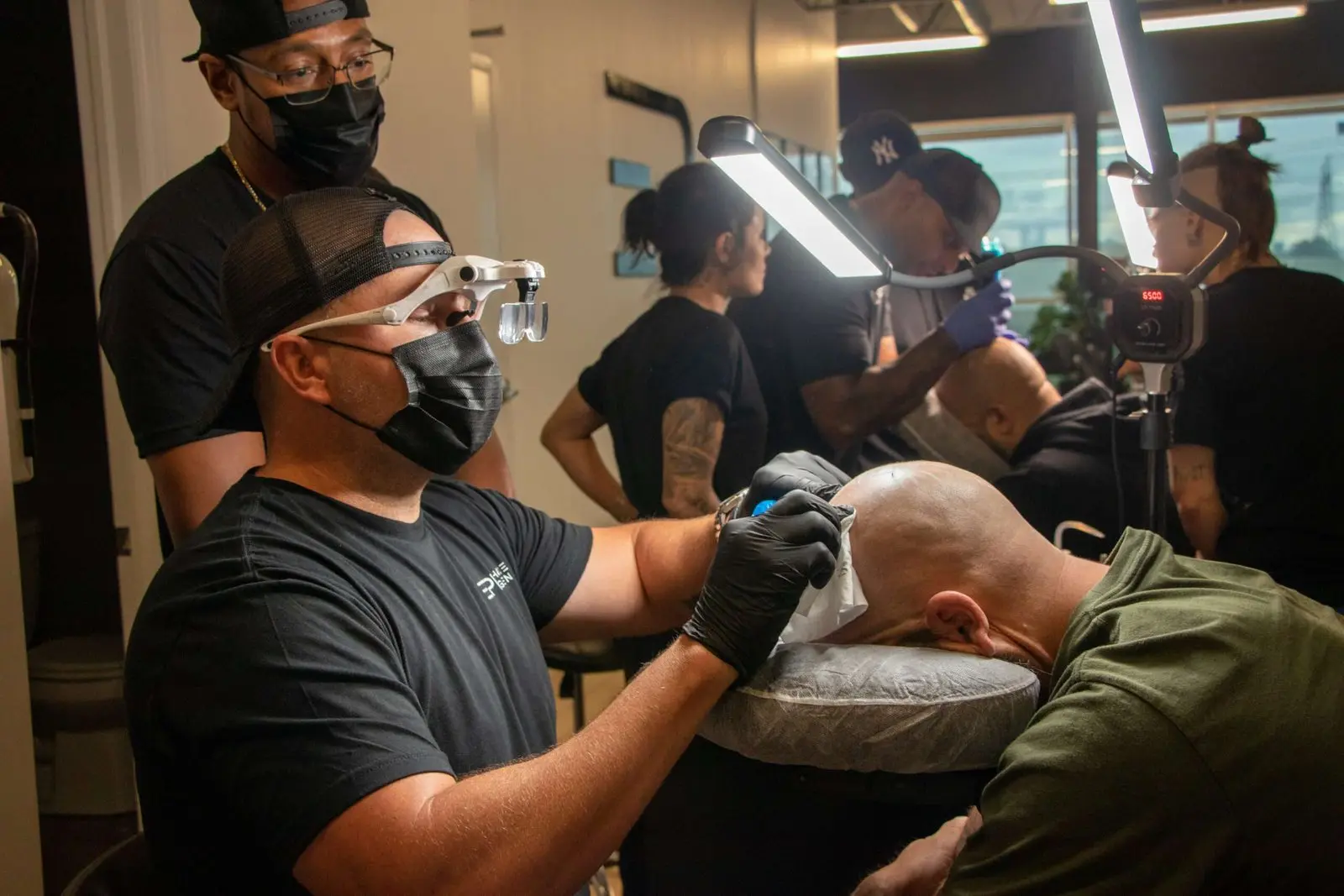
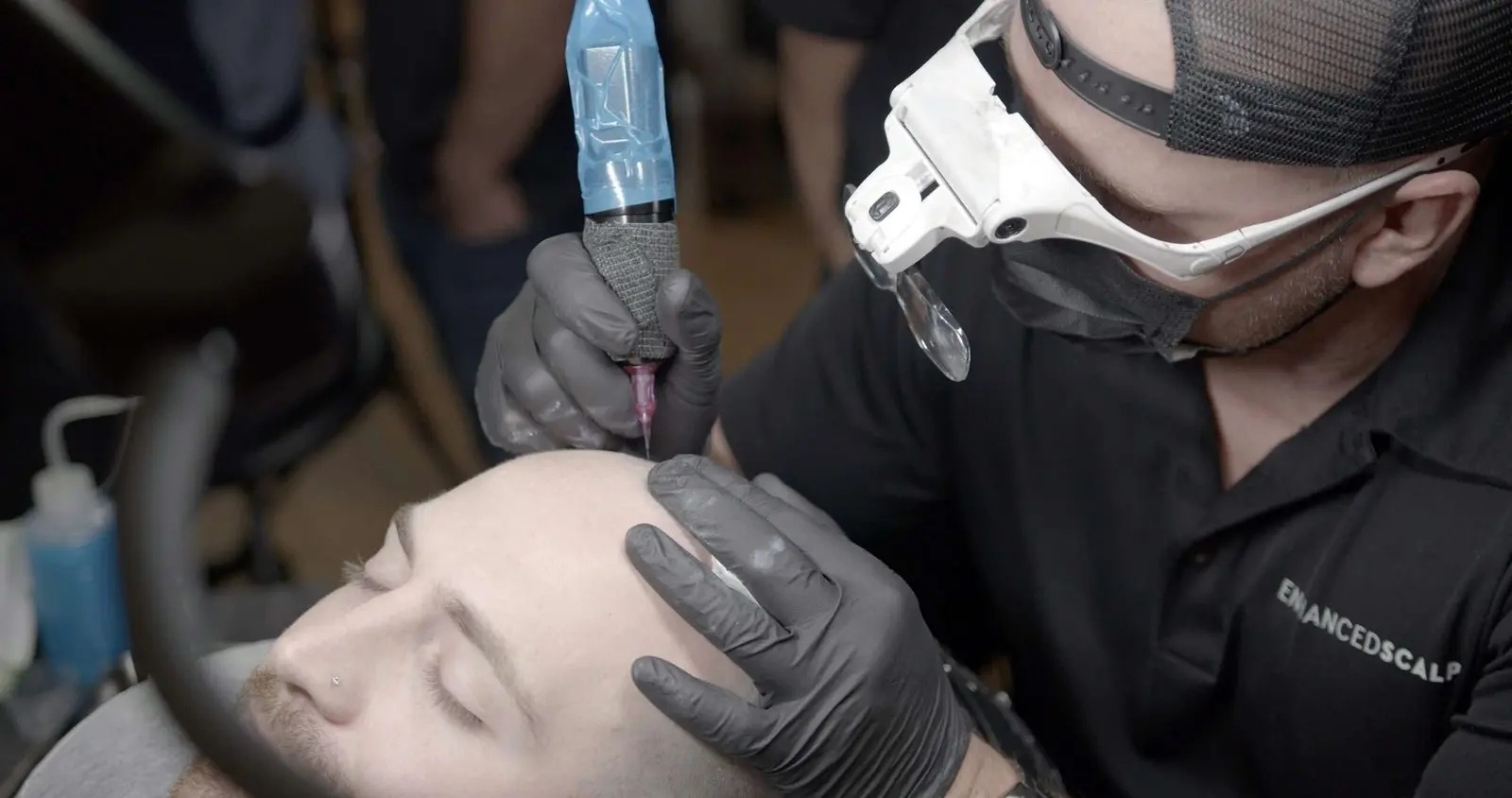
This is Session 1.
We are starting conservatively with ultra fine follicular impressions and building the density gradually. The finished result will rely on an intentional transition, denser and tighter through the areas where it needs to blend, then progressively softer and more open as we move into the frontal hairline.
The goal is not to make the hairline darker.
It is to make it look like it belongs there.
Correction takes patience. Sometimes the best touch up starts with removing what was there first.
Session 1 complete. Stay tuned for the full rebuild.
Posted on Instagram on September 4, 2026
Written by
James Christopher
8 more from this post
Each print opens full screen.