Case No. 442
Session 2 — SMP should never be treated as a one protocol procedure
Scar camouflage and density on the scalp chart
At the consultation, James sketches the area he will treat on a chart like this one.
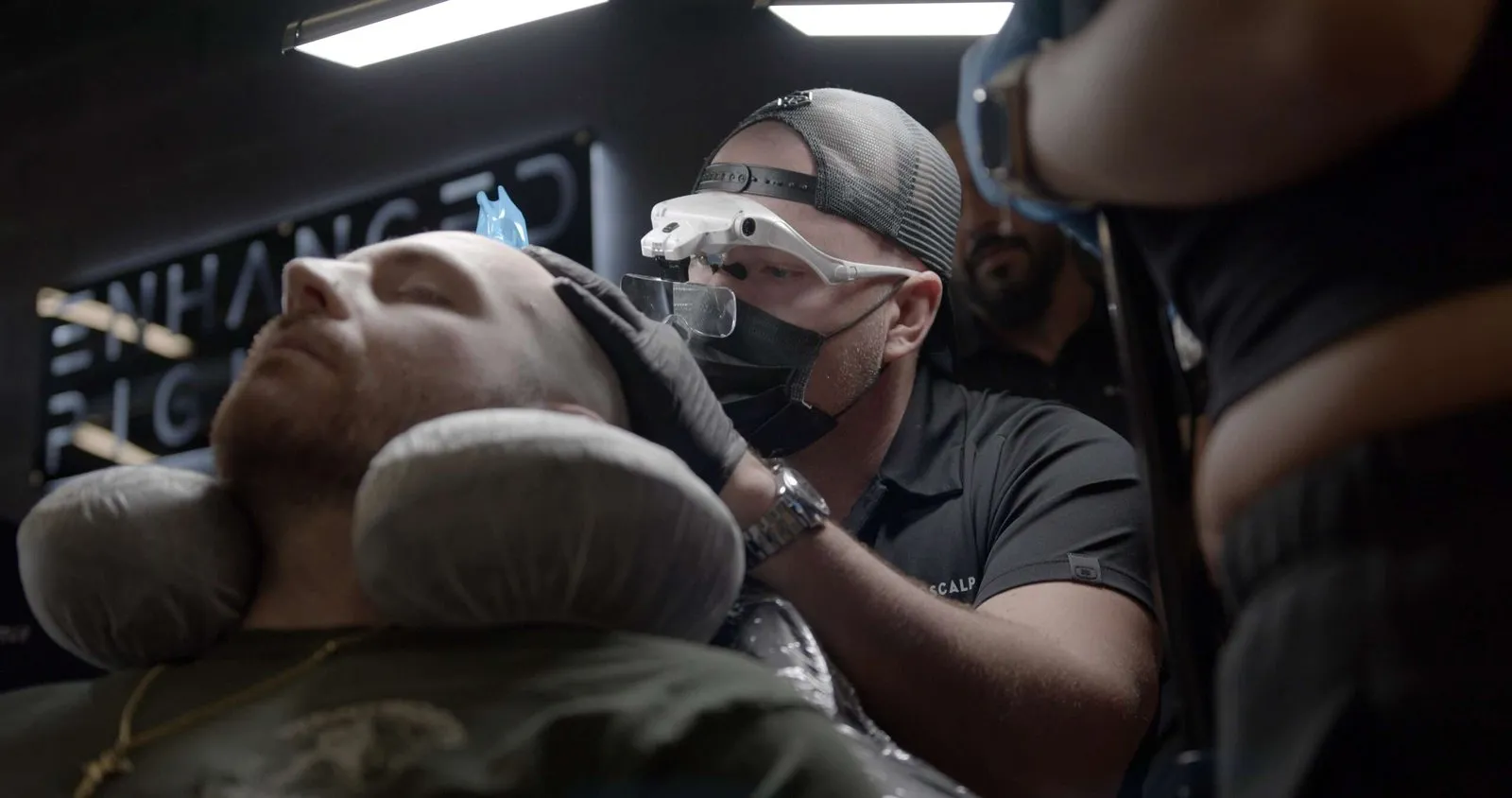
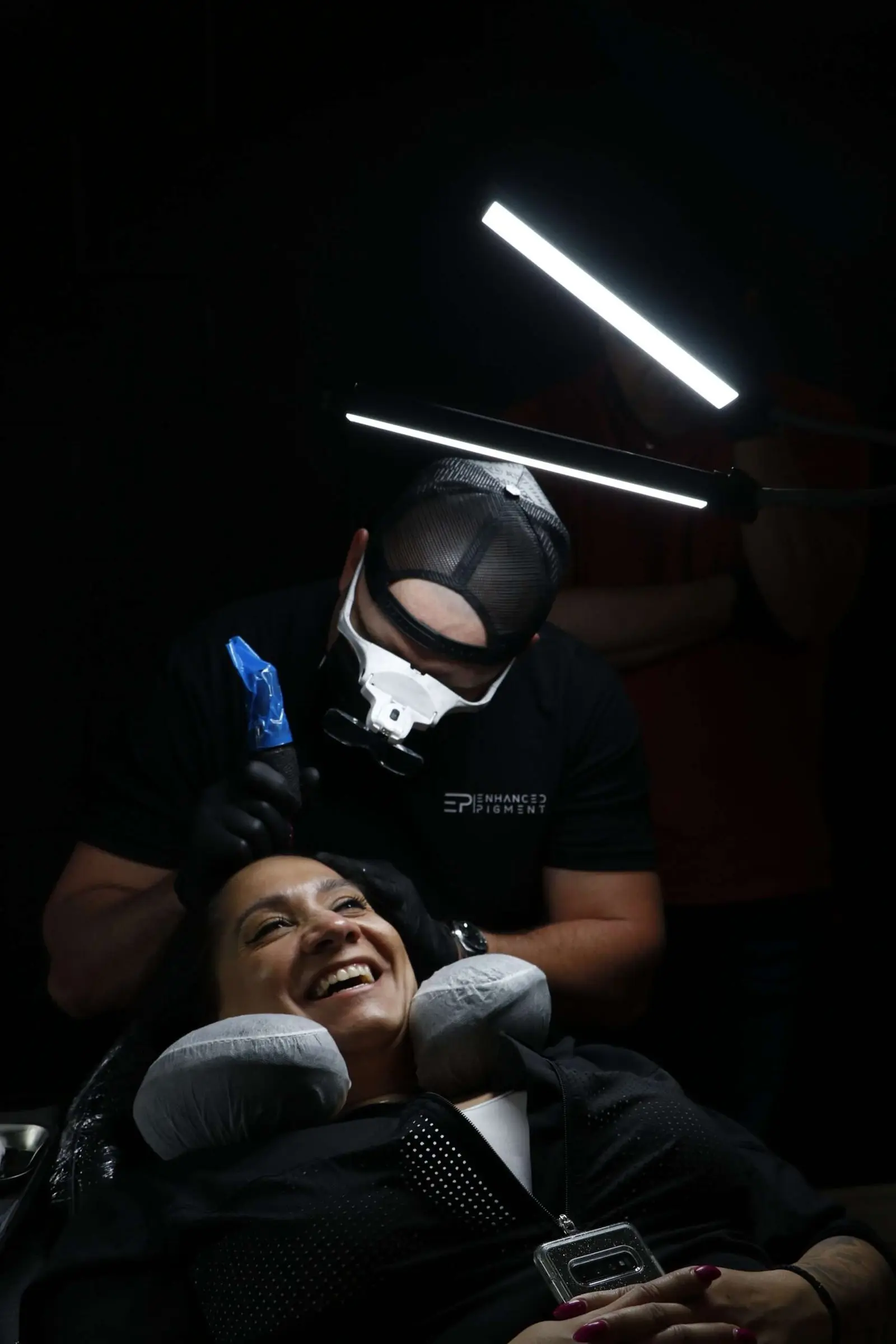
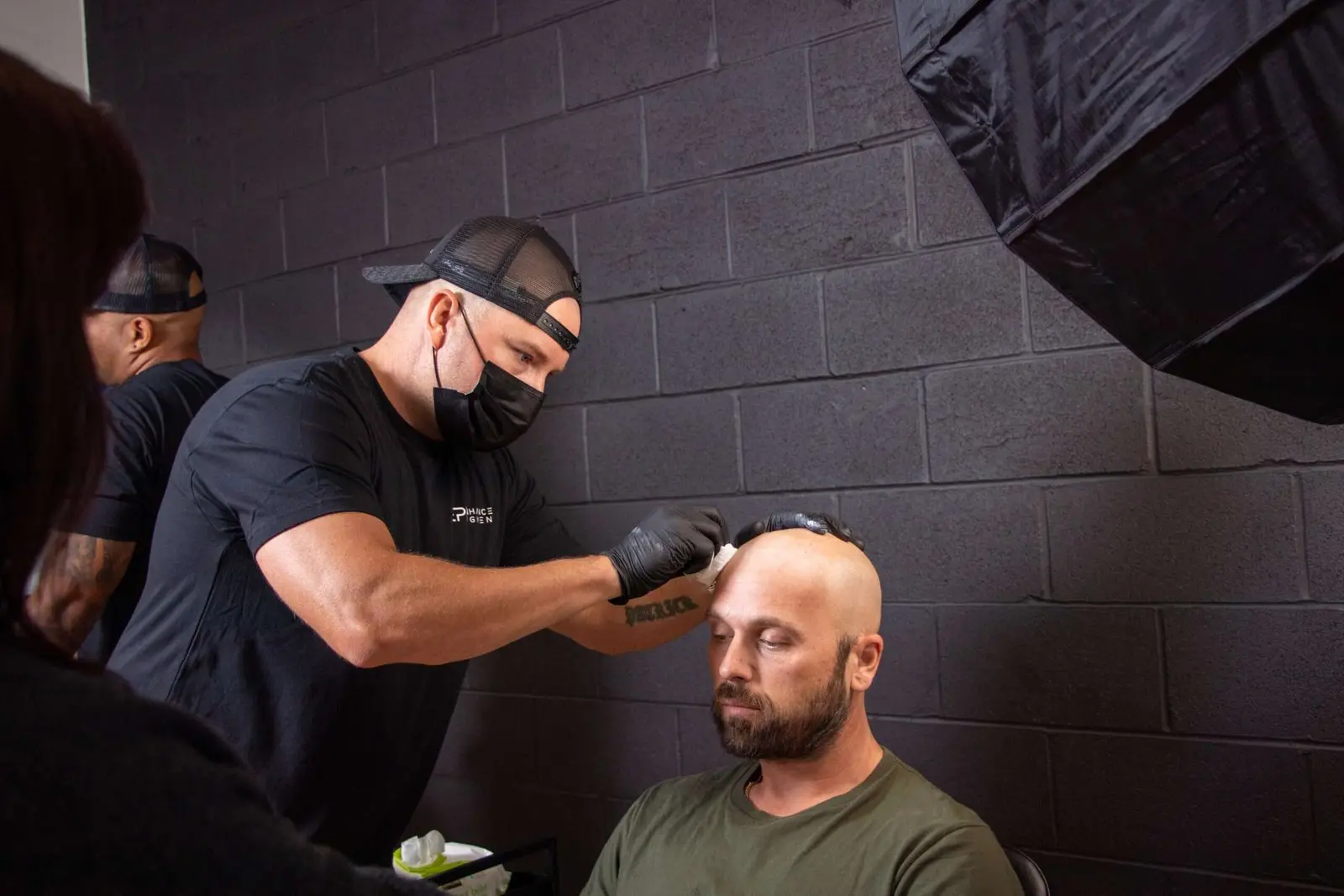
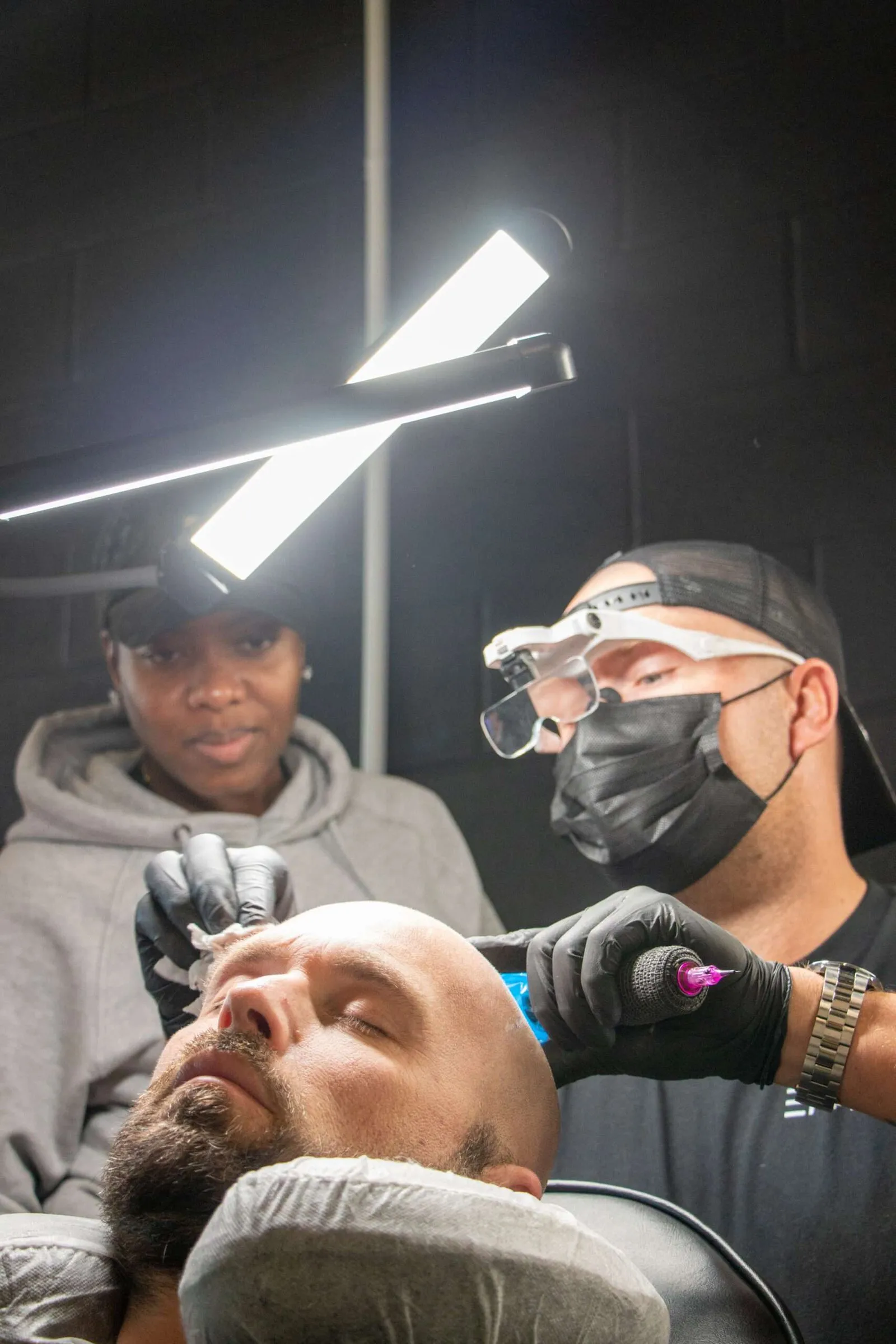
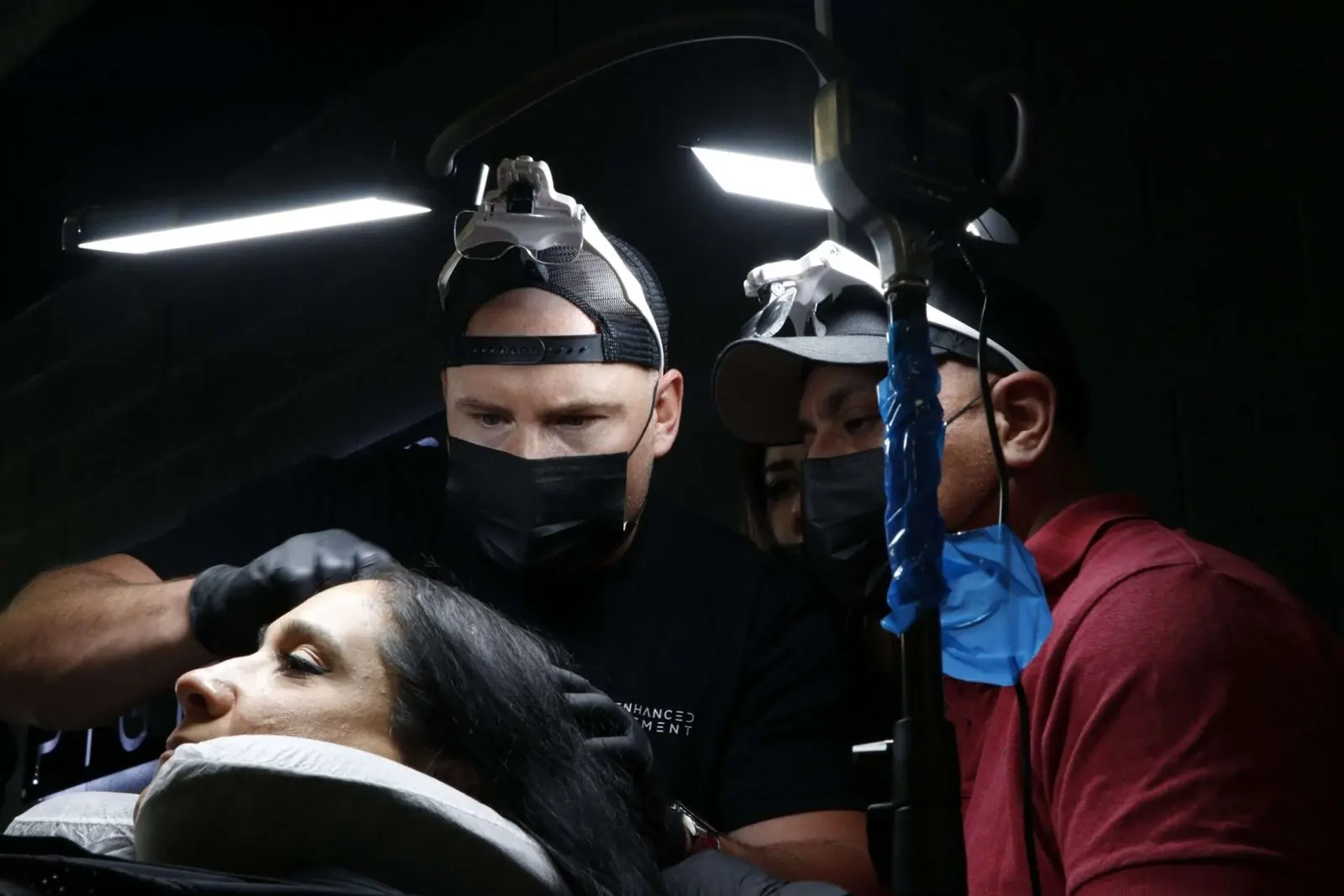
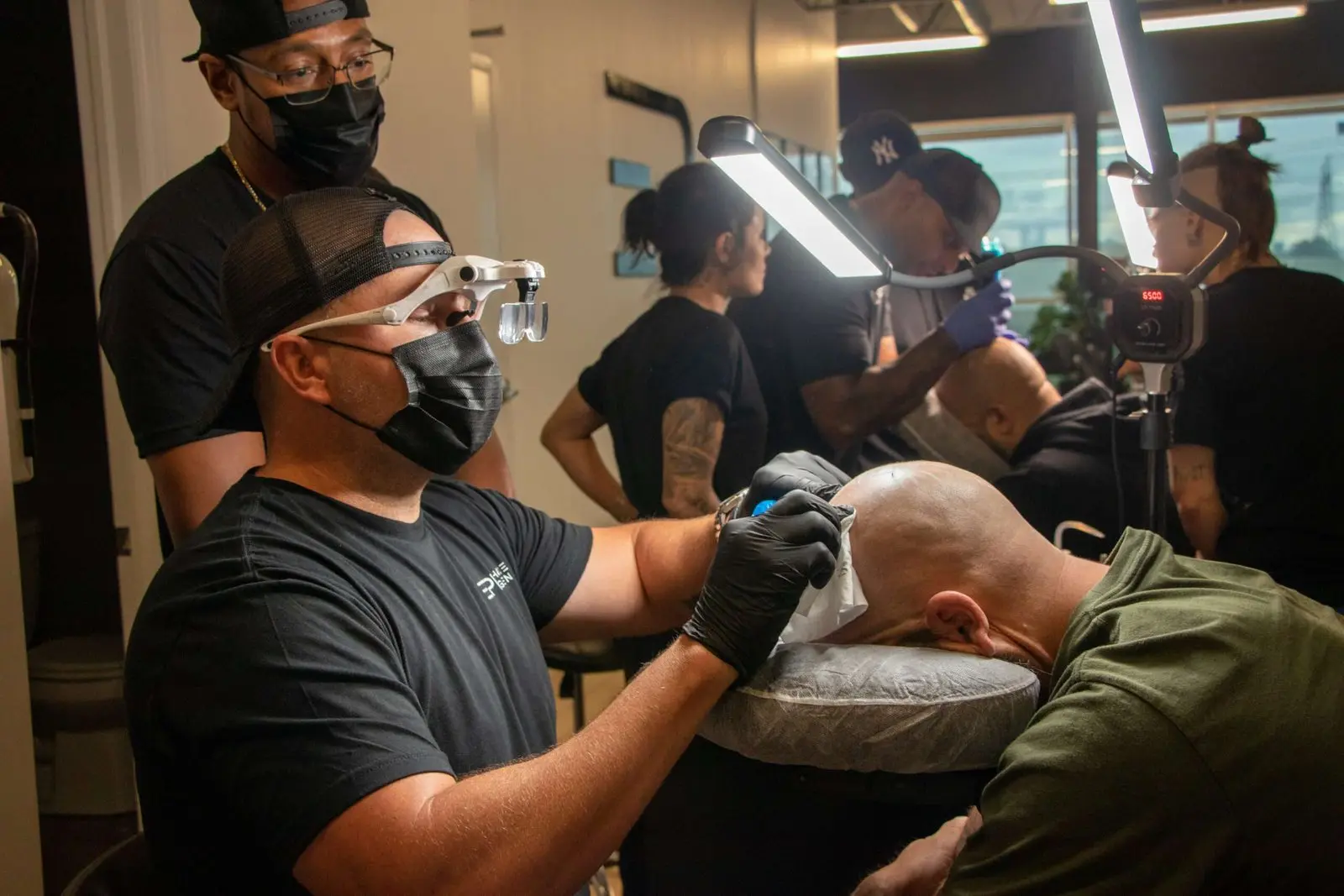
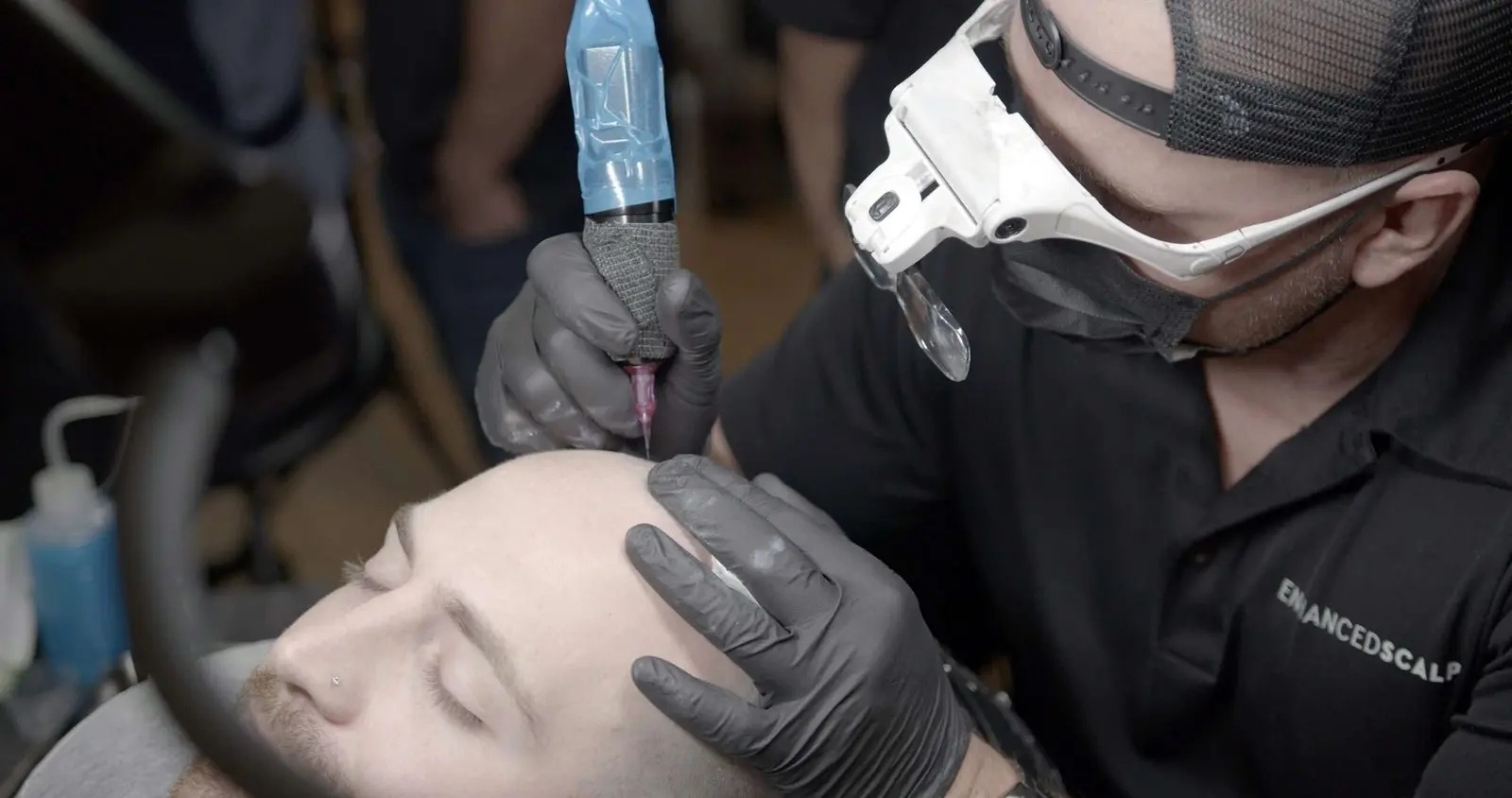
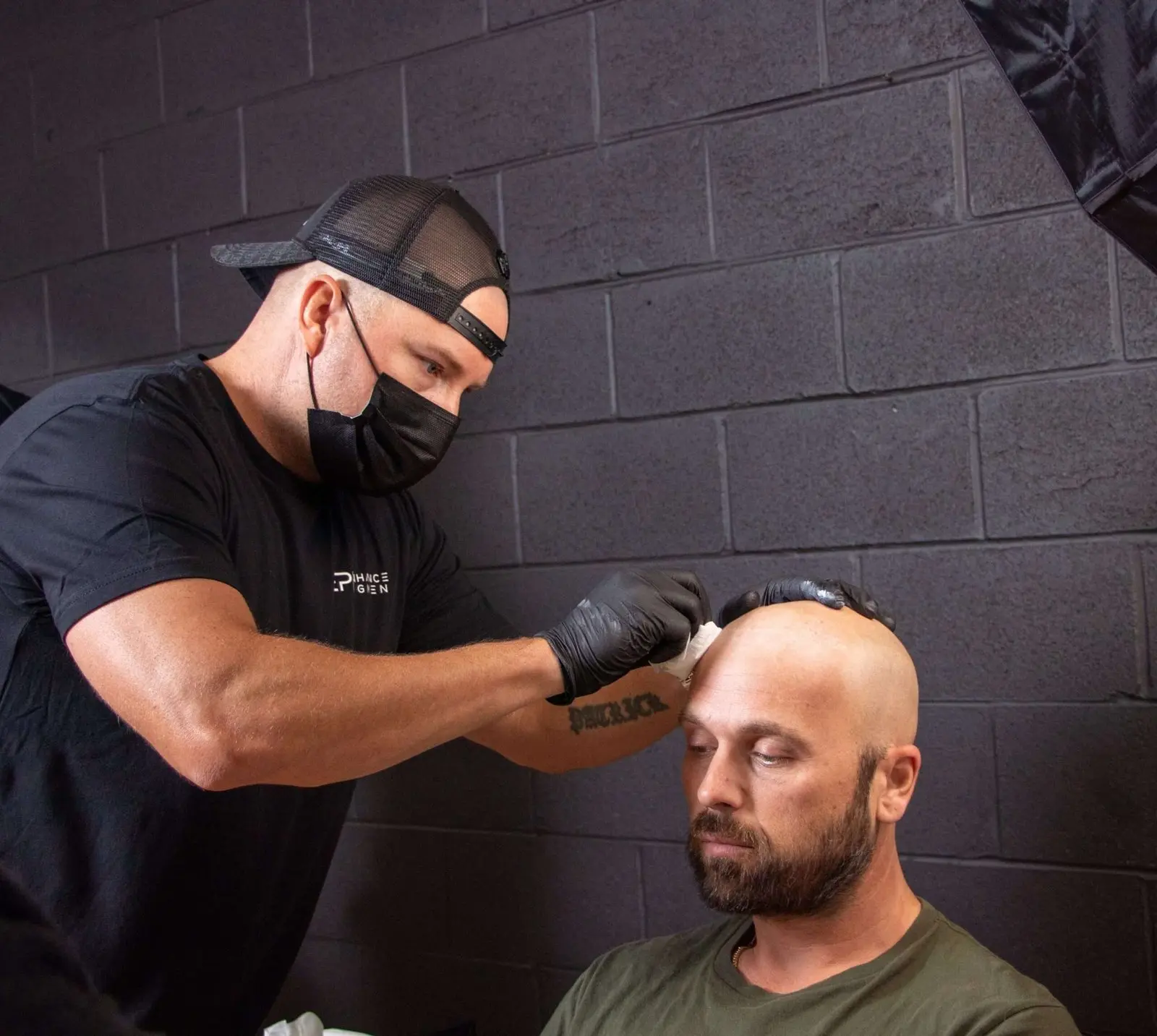
Session 2 builds density with new impressions placed between the first ones.
How scar camouflage worksIn James's words
Skin varies significantly from client to client. Thickness, elasticity, fibrosis, oil production, previous trauma, inflammation, sun damage and scar tissue can all affect needle response, pigment placement and ultimately how the treatment heals.
This case presented with dense, highly resistant, rubbery tissue. That requires a more conservative approach.
The mistake is trying to force the same immediate visual density into every scalp.
You can make fresh SMP look dark very quickly.
That does not mean it will heal well.
Overworking resistant skin, increasing trauma or repeatedly chasing darkness can compromise clarity, create excessive saturation and produce an artificial result once healed.
After years of performing SMP and testing different techniques, one principle remains constant:
The skin dictates the treatment.
Not the camera.
Not the social media post.
Not the desire for an instant transformation.
Some clients retain aggressively.
Some retain very little.
Some require lighter passes and additional layering.
That is normal.
My goal is not to create the darkest possible Session 1 or Session 2.
My goal is to create the most realistic healed result possible.
If that requires more patience, more assessment and a slower build, that is exactly what I will do.
If you are looking for a heavy, tattooed appearance or an unnatural blend, I am not the artist for you.
I specialize in natural SMP only.
This is Session 2.
Controlled.
Measured.
Built according to the tissue.
Still in progress.
Posted on Instagram on October 5, 2026
Written by
James Christopher