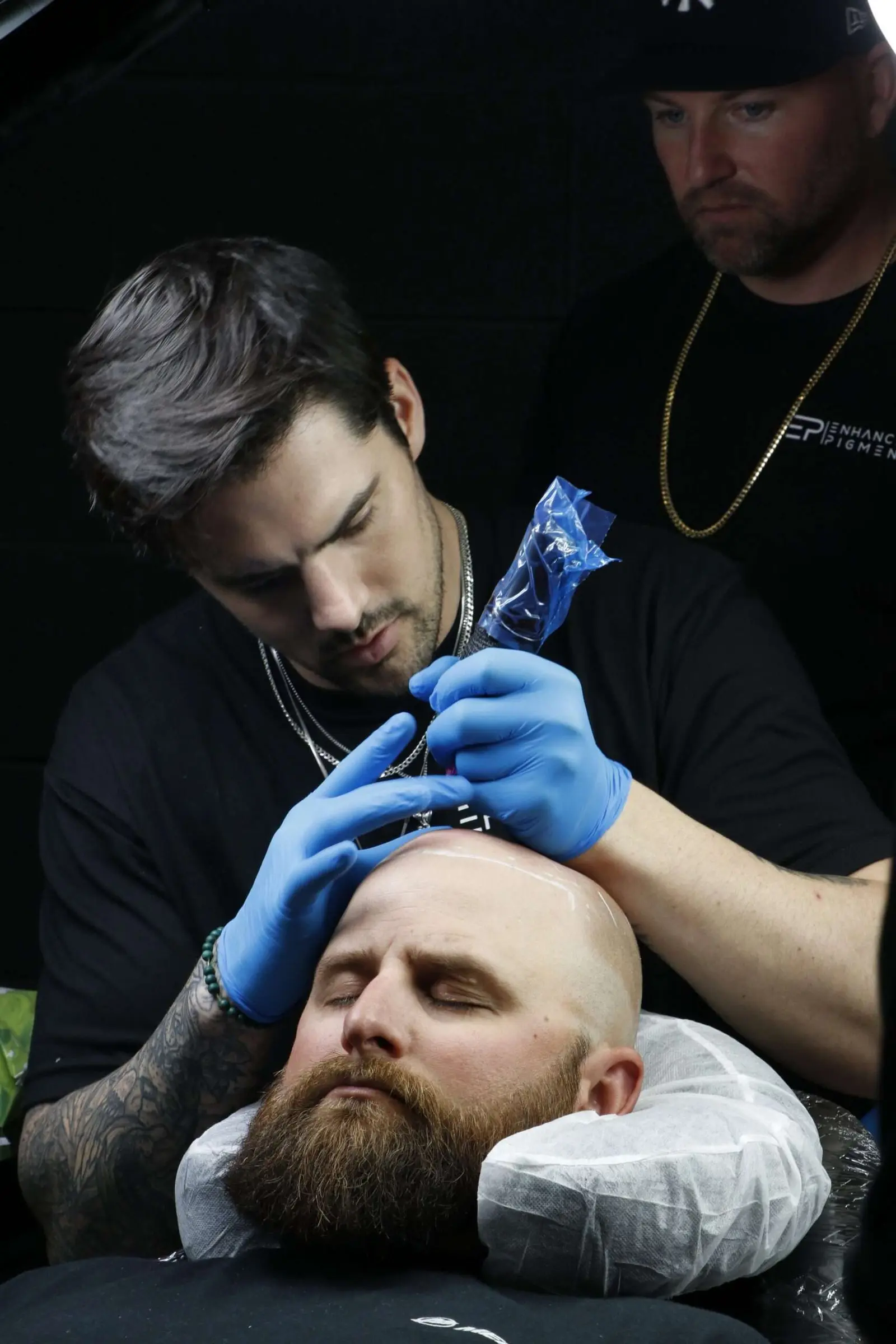
Case No. 211
Session 1 of 3 — Foundation phase
Scar camouflage, transplant repair and density on the scalp chart
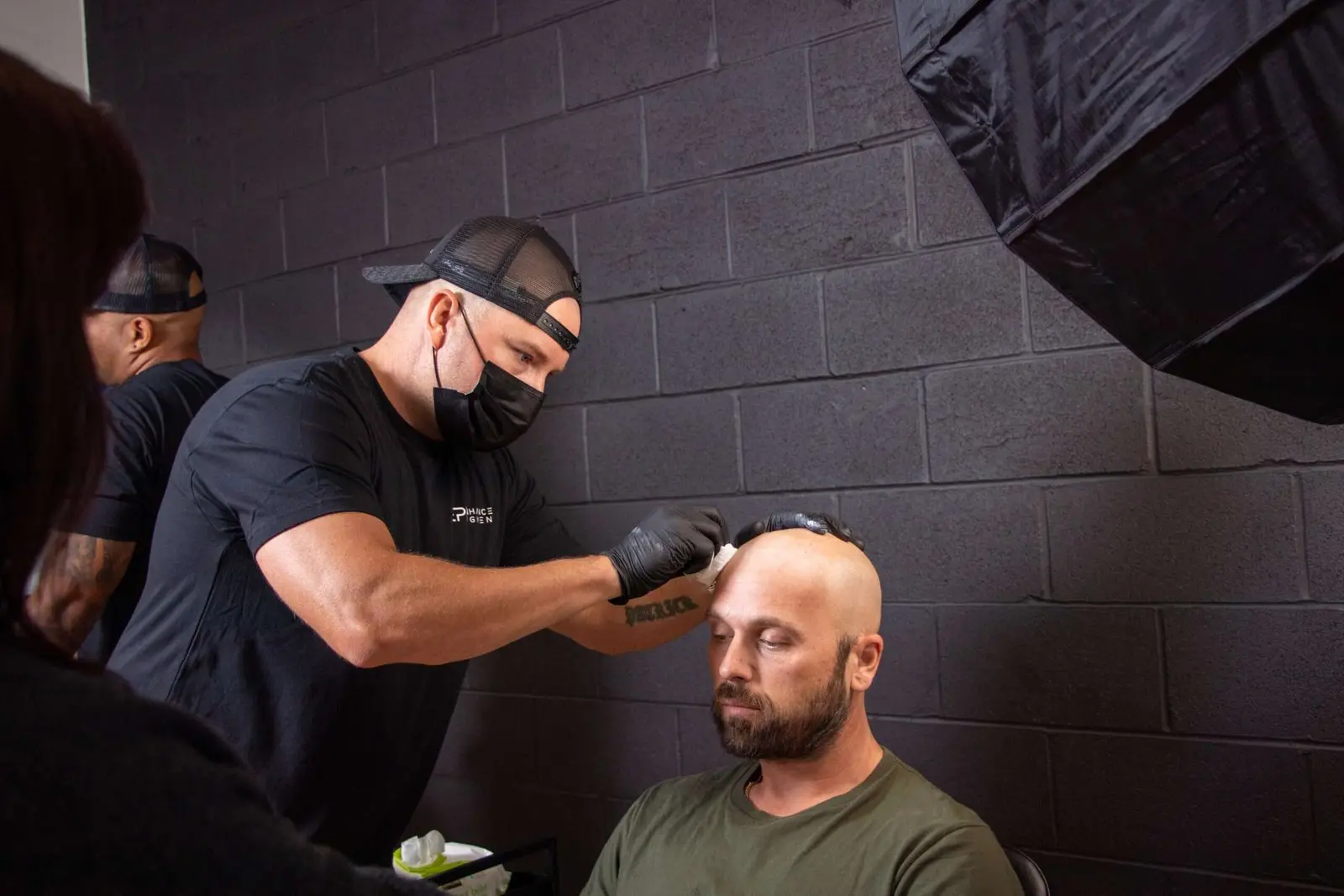
At the consultation, James sketches the area he will treat on a chart like this one.
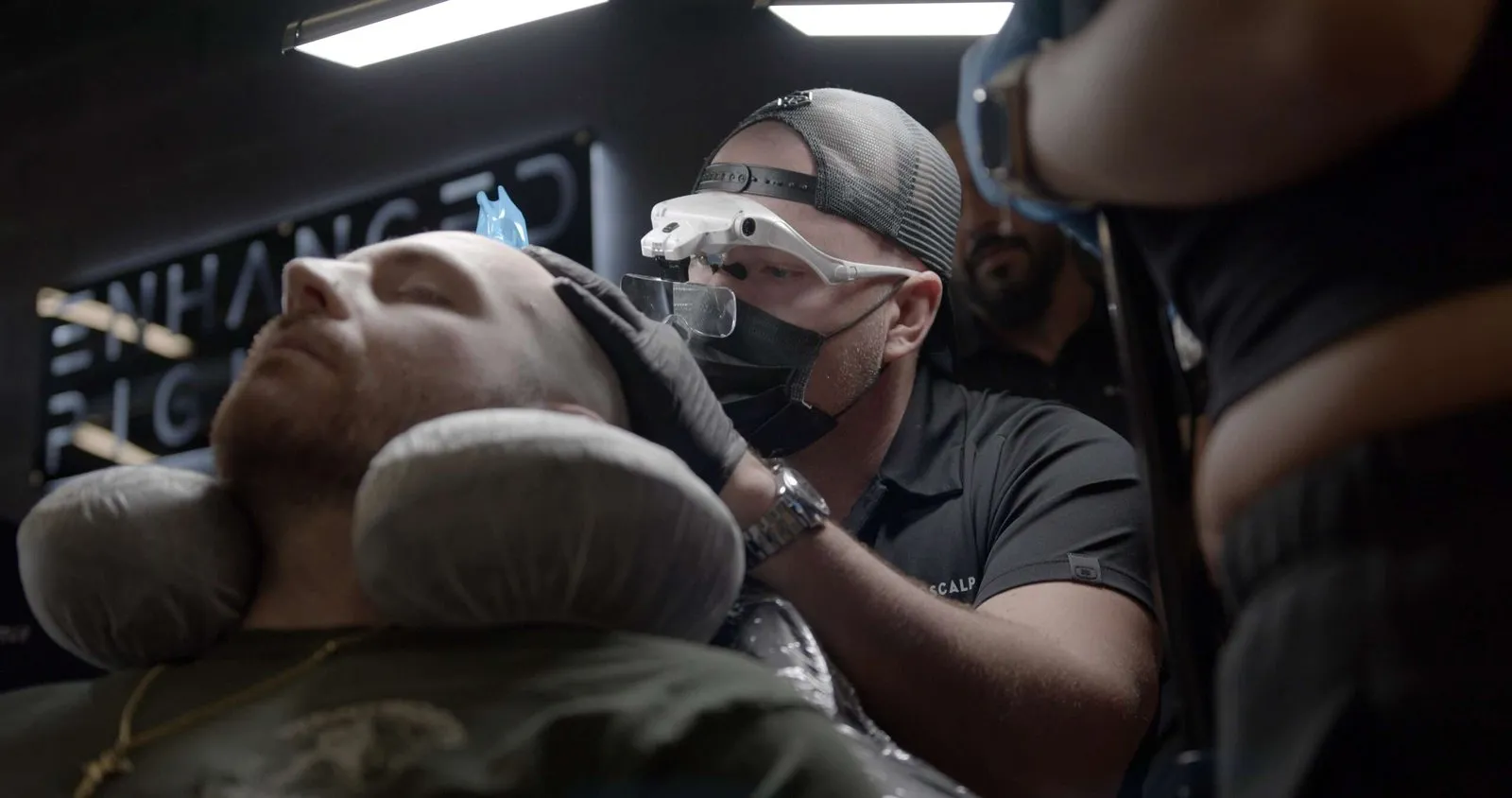
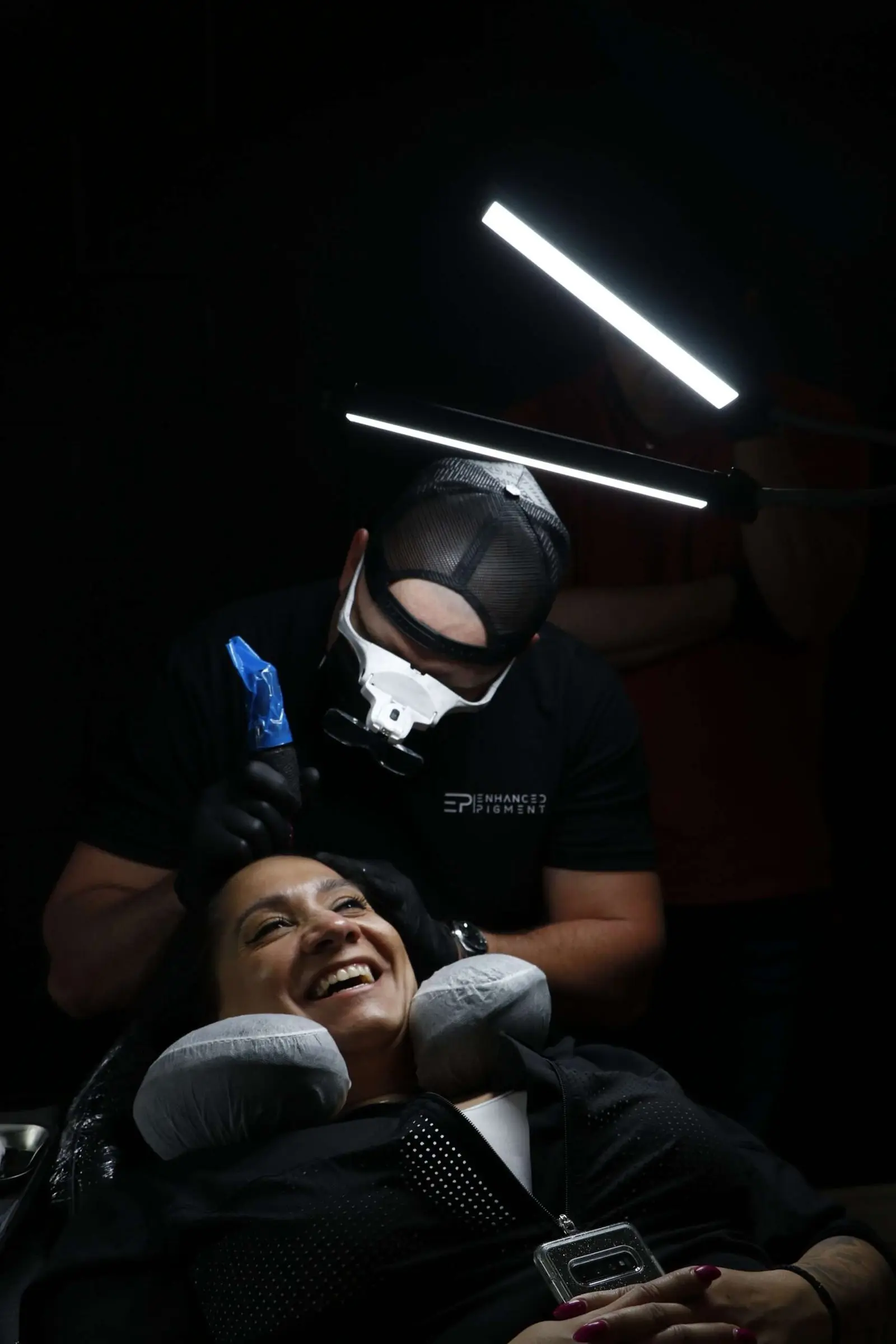
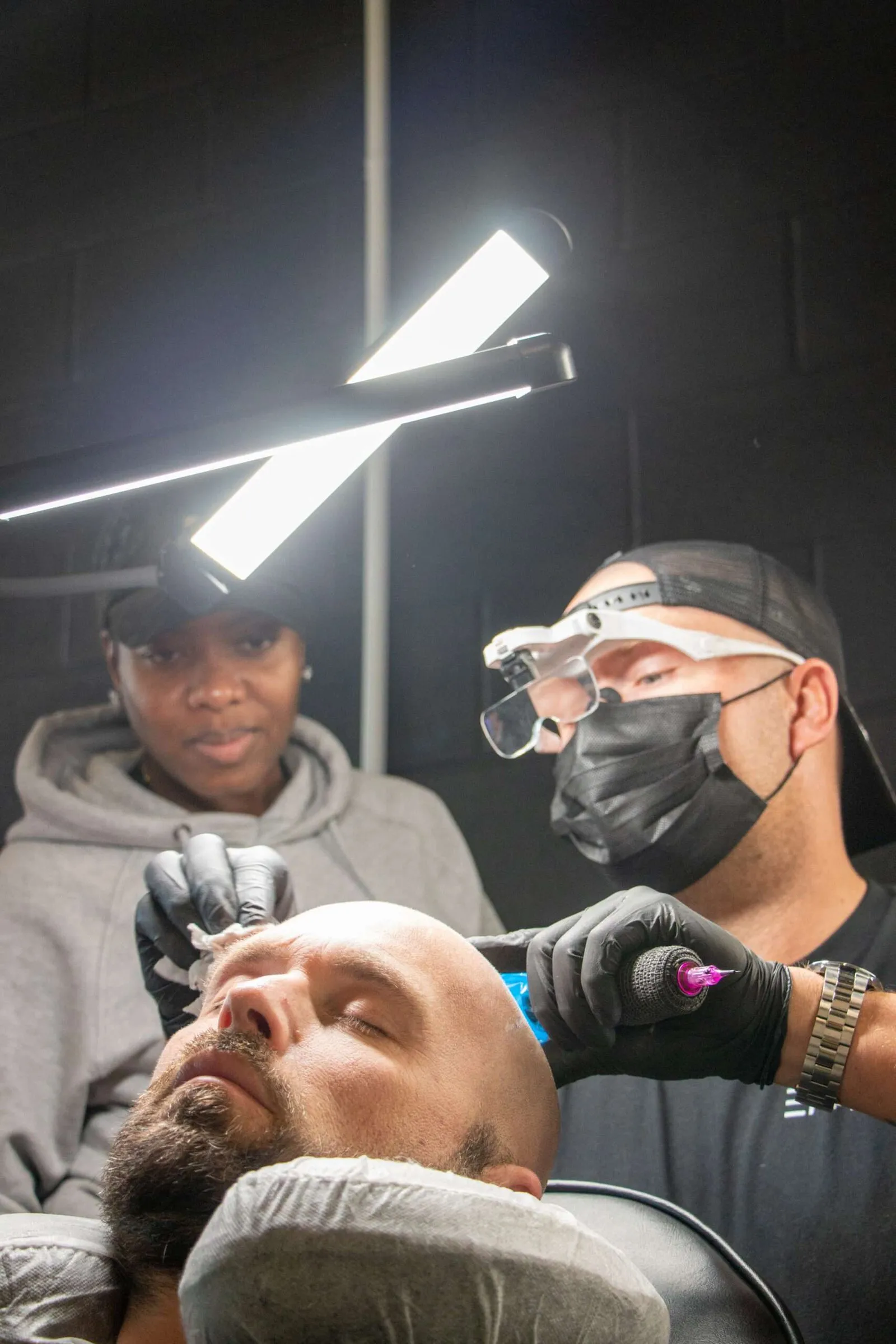
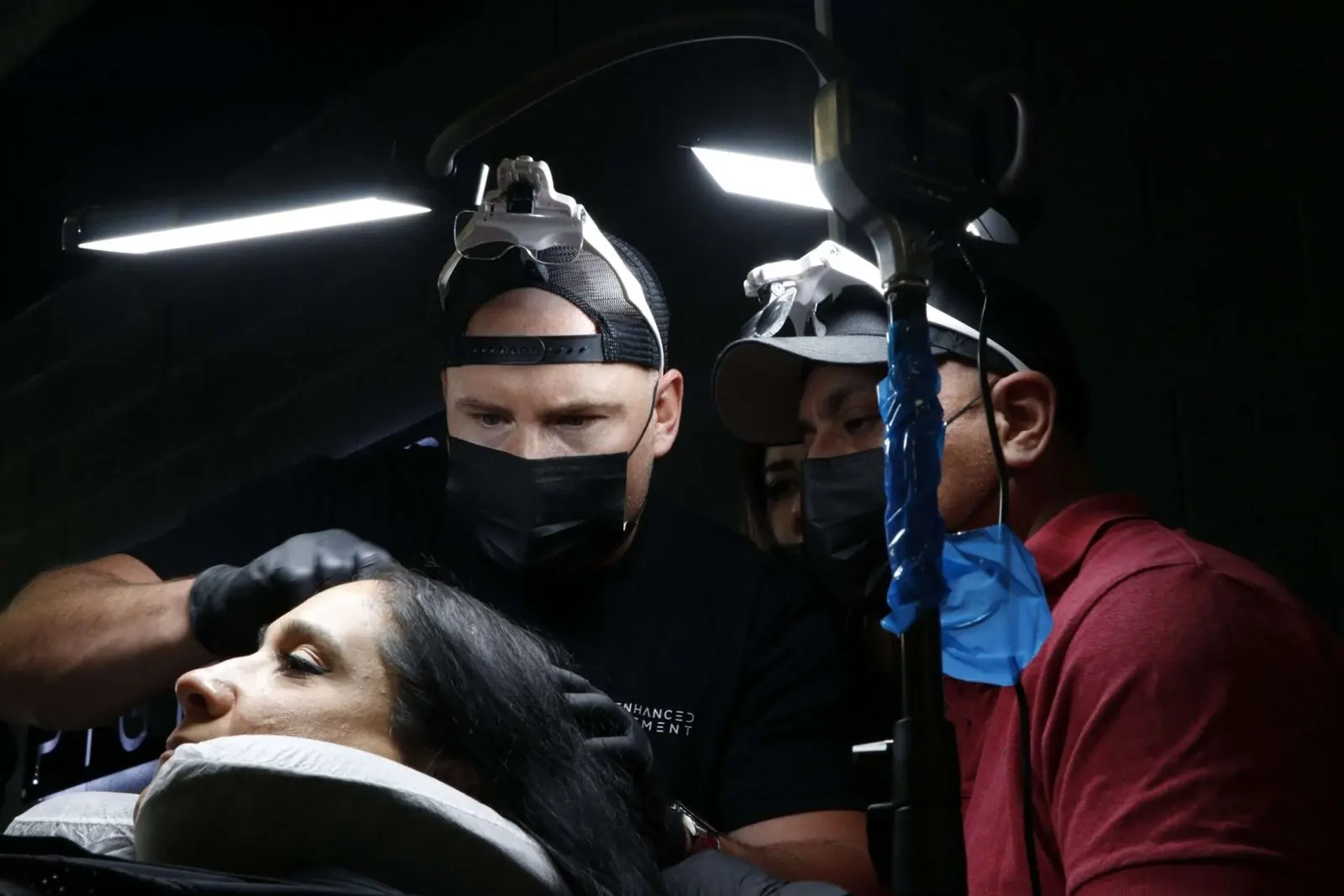
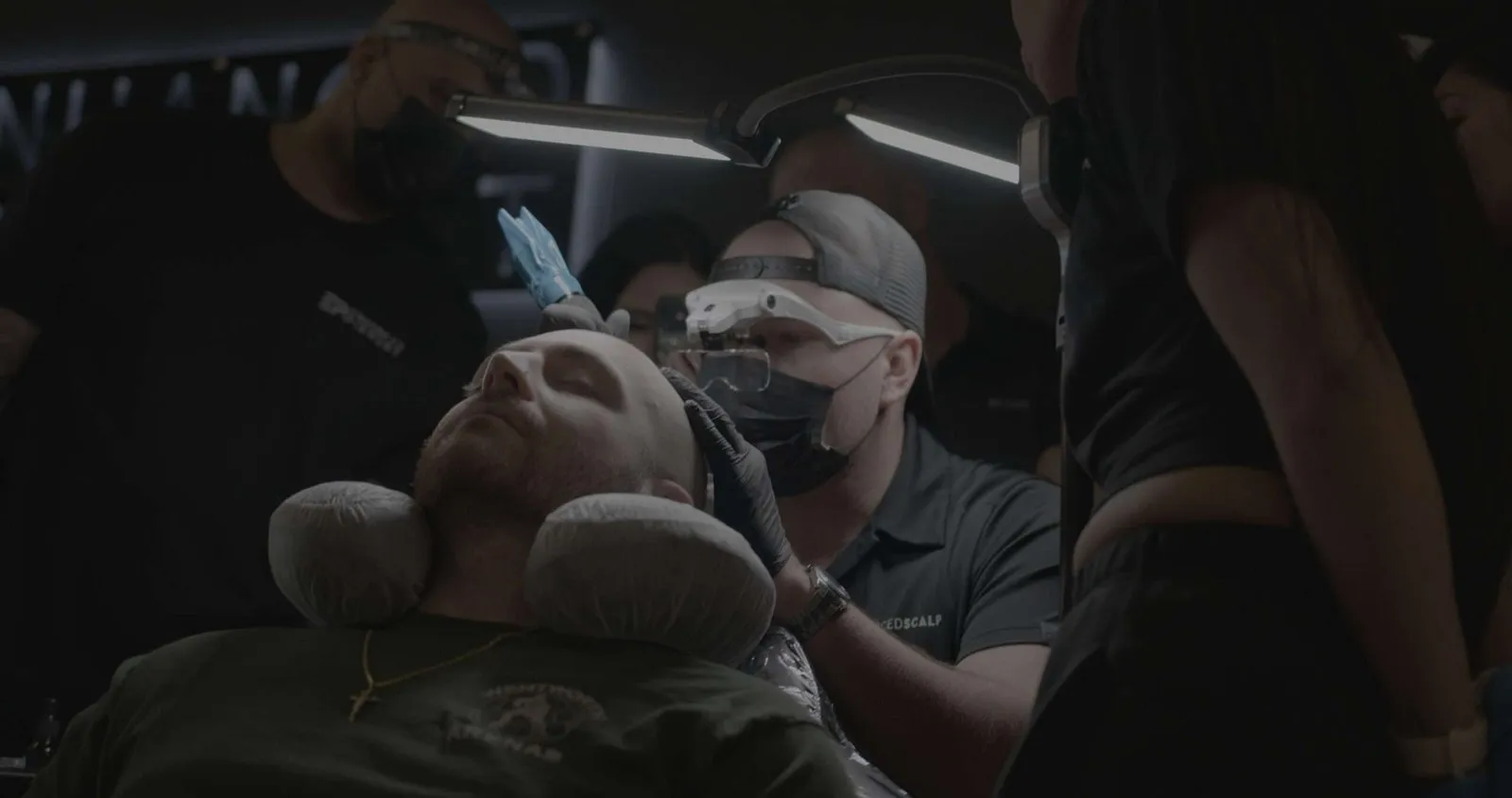
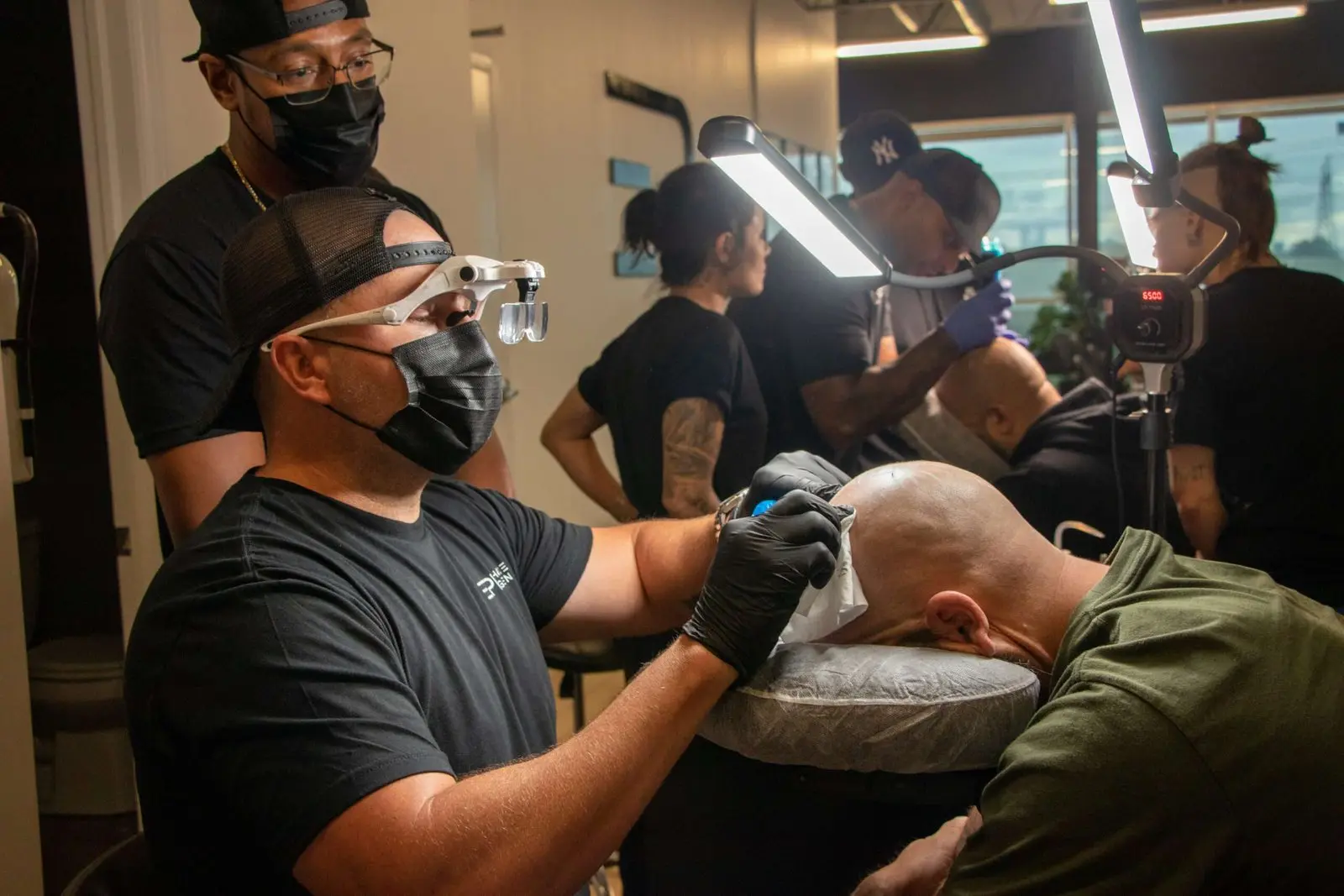
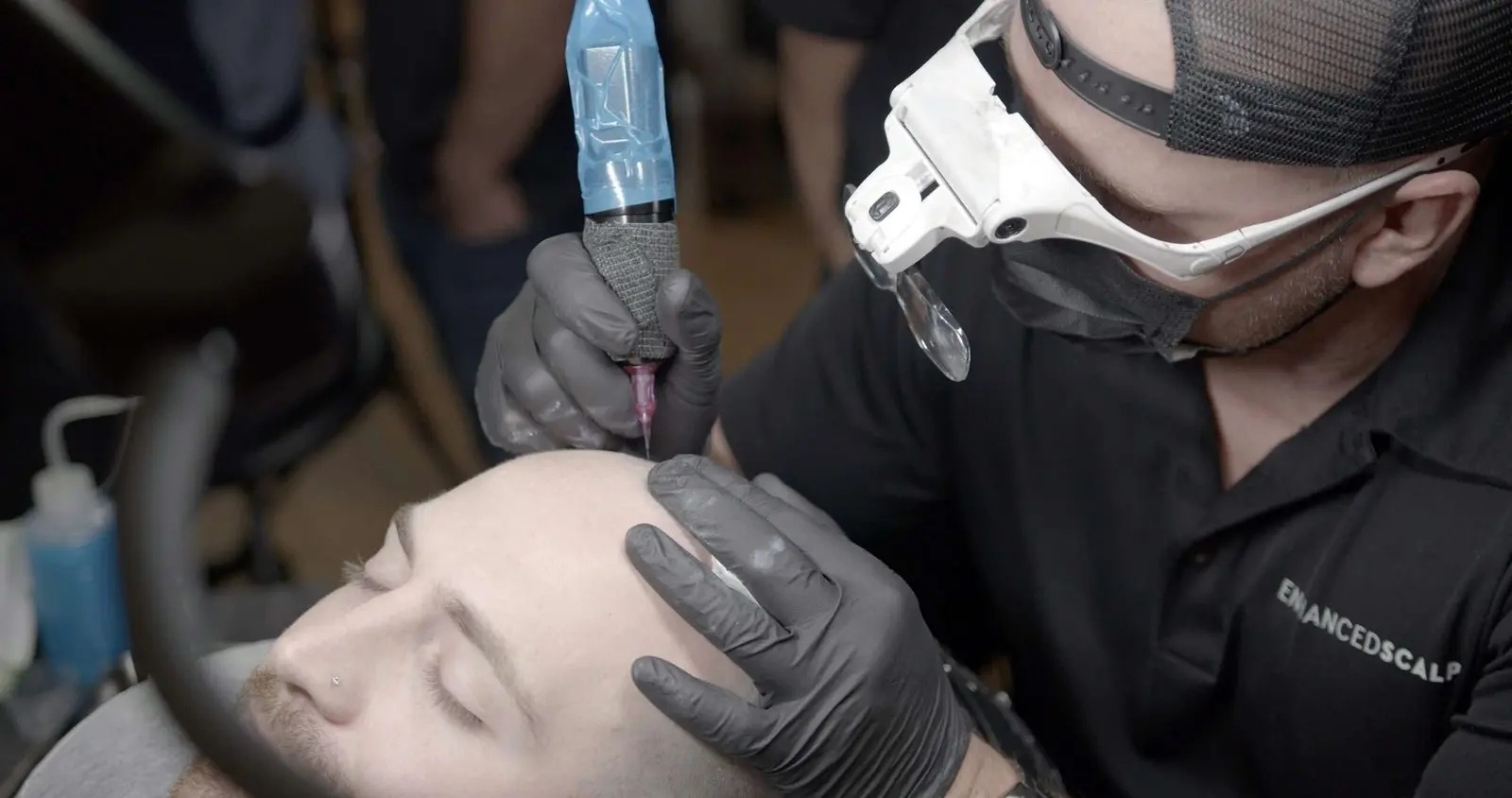
Session 1 lays the foundation: the hairline is drawn and a soft first layer goes across the area.
How scar camouflage works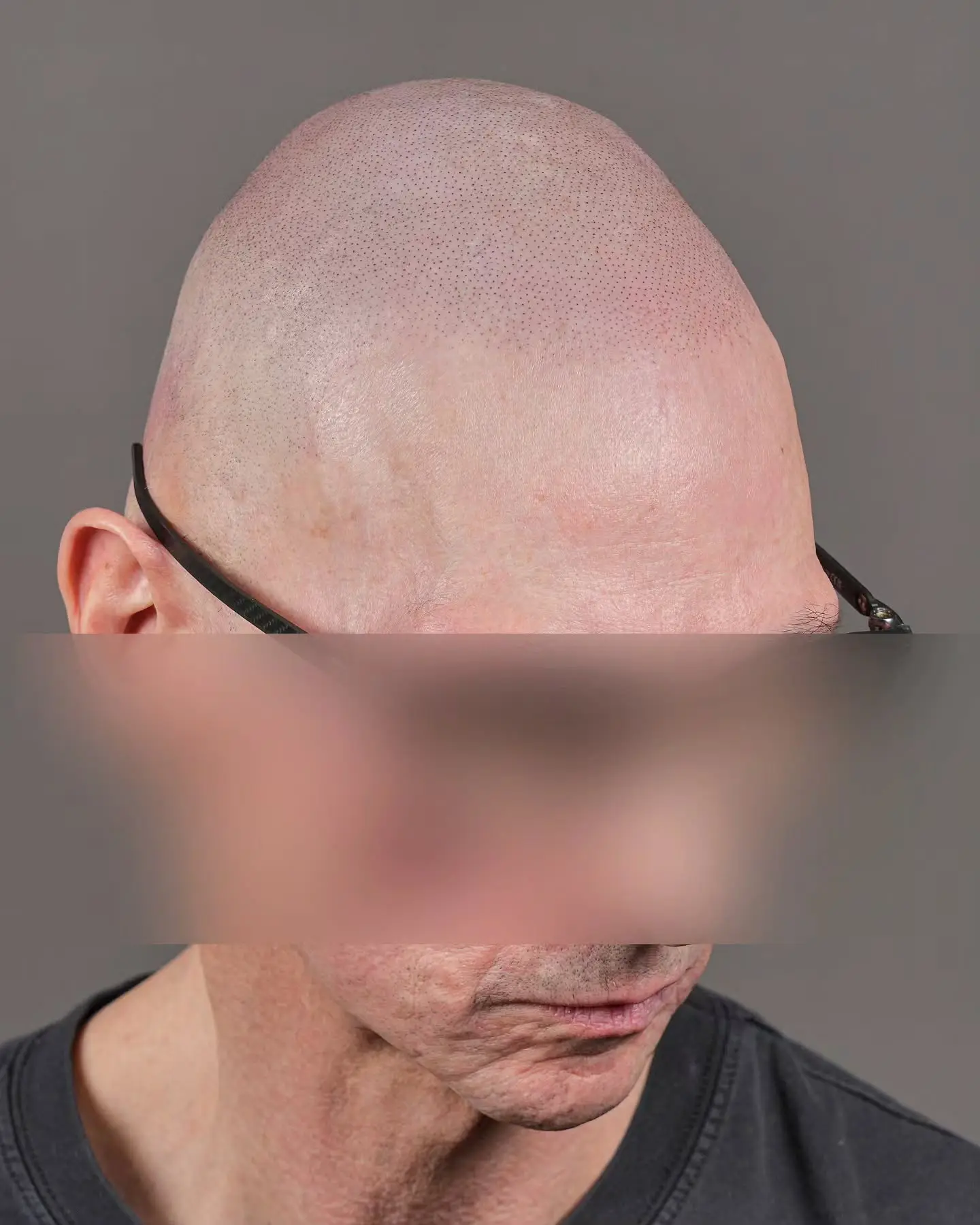
In James's words
Client profile
Age 65
Caucasian
History of 2 failed hair transplants (FUT + FUE)
Visible scarring and poor density from prior procedures (2018)
Treatment overview
This initial session focused on establishing a soft, natural foundation while beginning the process of camouflaging transplant scarring.
The client presented with thin, dry, and compromised skin — a common result after multiple surgical procedures where the scalp has been repeatedly incised and manipulated.
In cases like this, a conservative and controlled approach is critical. Density is built gradually through layering to ensure proper healing, retention, and a realistic end result.
Industry reality
Most individuals are not ideal candidates for hair transplants.
Limited donor supply, ongoing hair loss, and unrealistic expectations often lead to poor outcomes — leaving patients with visible scarring and insufficient coverage.
Both FUT and FUE procedures create permanent damage to the donor area. When the result fails to meet expectations, patients are left with disfigurement that cannot simply be reversed.
Unfortunately, many clinics operate on volume rather than long-term outcome — prioritizing procedures over proper candidacy.
Why SMP
Scalp micropigmentation provides a non-surgical solution to restore the appearance of density while effectively camouflaging transplant scars.
This allows us to reset the entire look in a controlled, predictable manner.
What to expect
This is session 1 of 3.
Additional sessions will refine density, soften transitions, and fully integrate scar camouflage.
Fresh impressions may appear slightly darker and more defined immediately post-treatment.
Redness typically subsides within 24 hours, and the pigment will settle into a softer, more natural tone as it heals.
No filters. No editing. Controlled studio lighting only.
Posted on Instagram on March 27, 2026
Written by
James Christopher
9 more from this post
Each print opens full screen.