Case No. 239
Session 1 – Foundation on failed hair transplant
Scar camouflage, transplant repair and density on the scalp chart
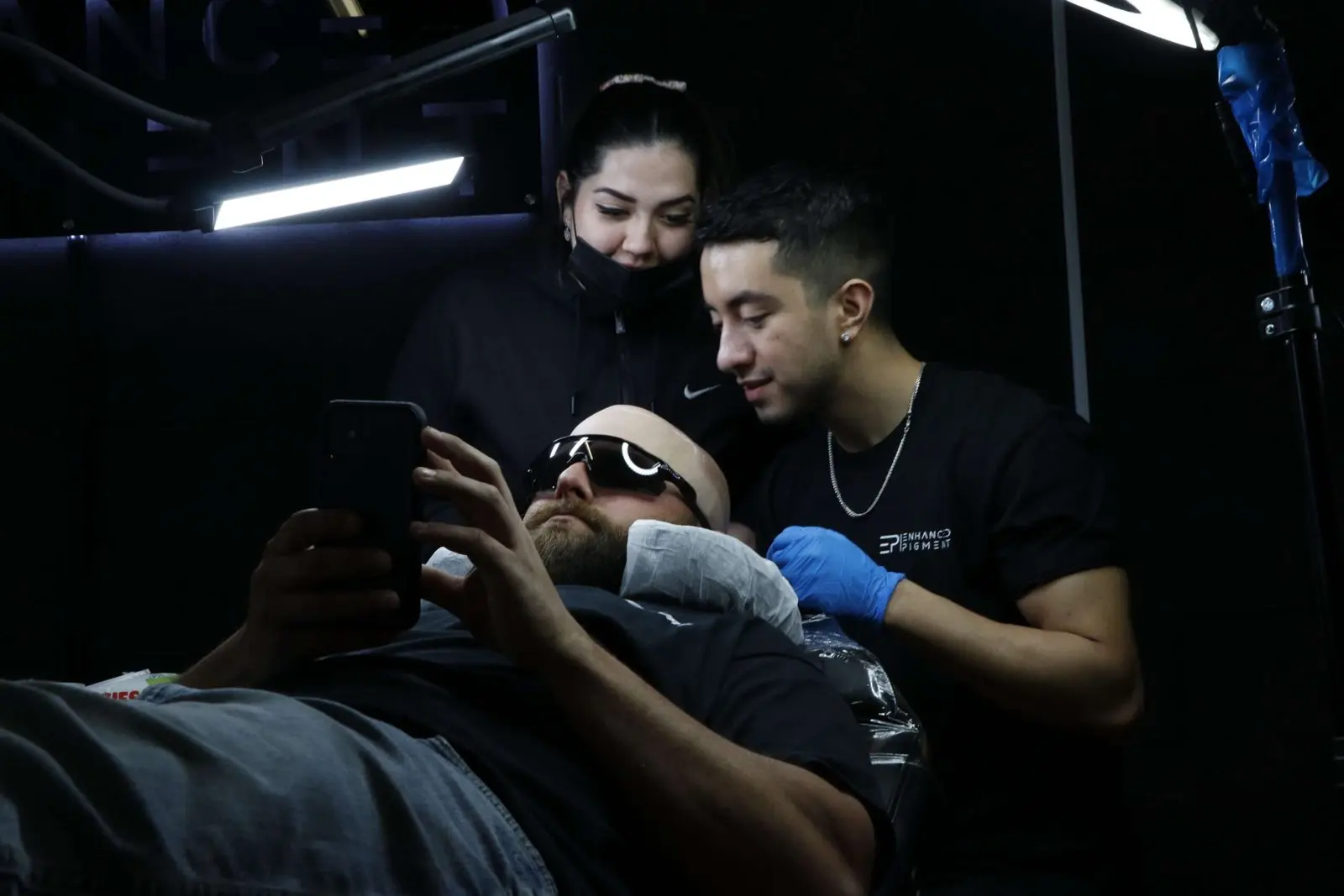
At the consultation, James sketches the area he will treat on a chart like this one.
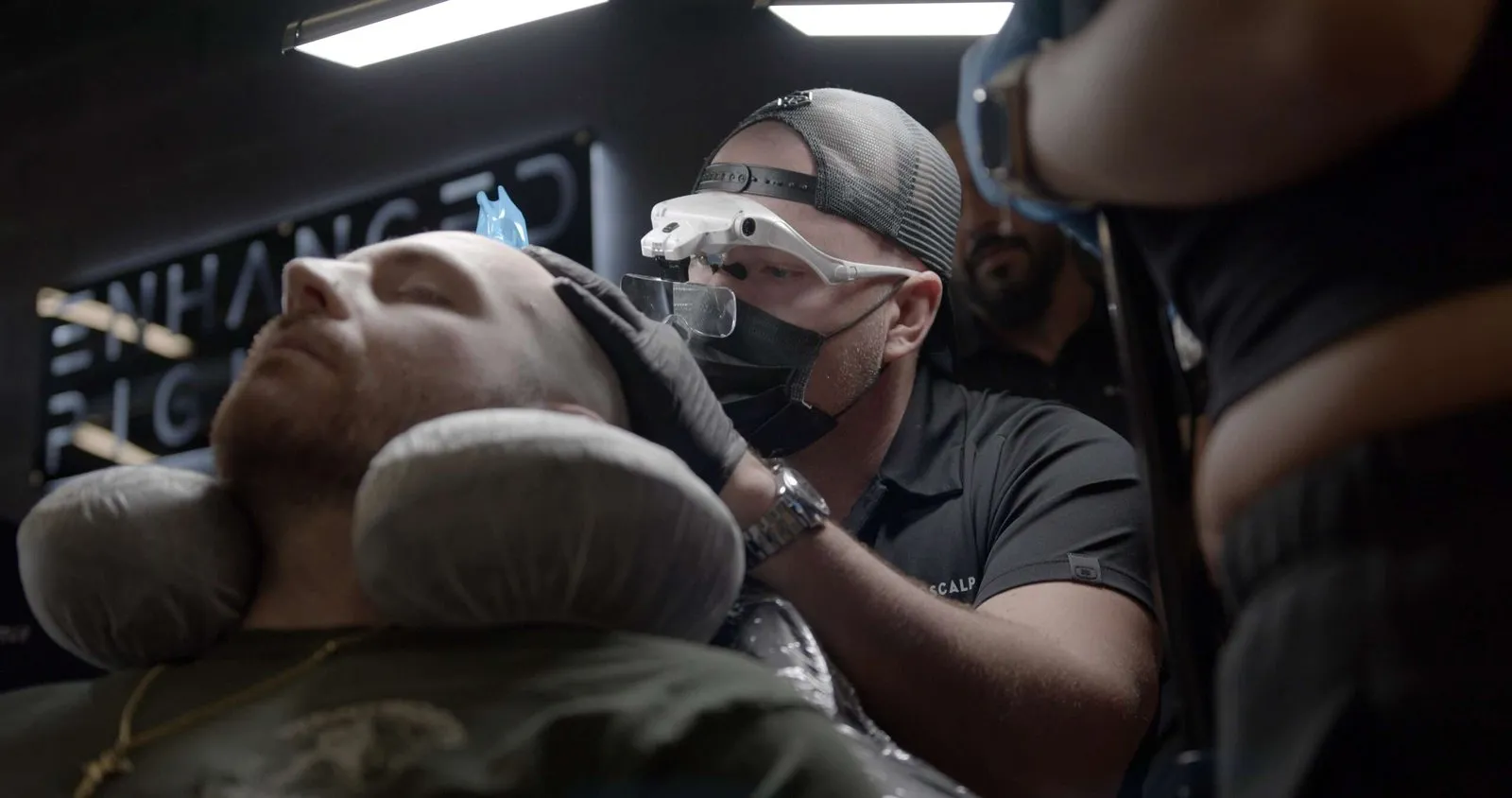
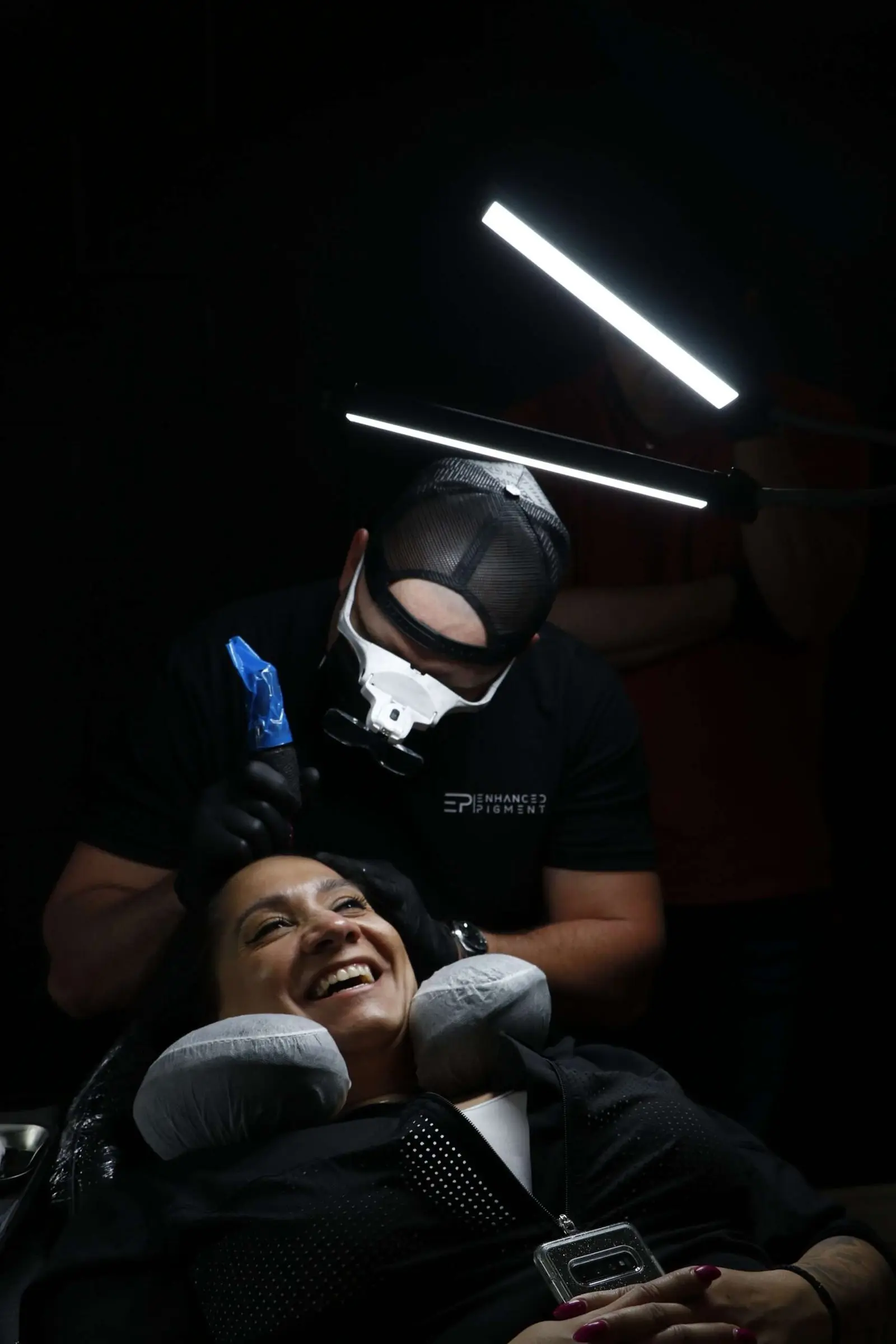
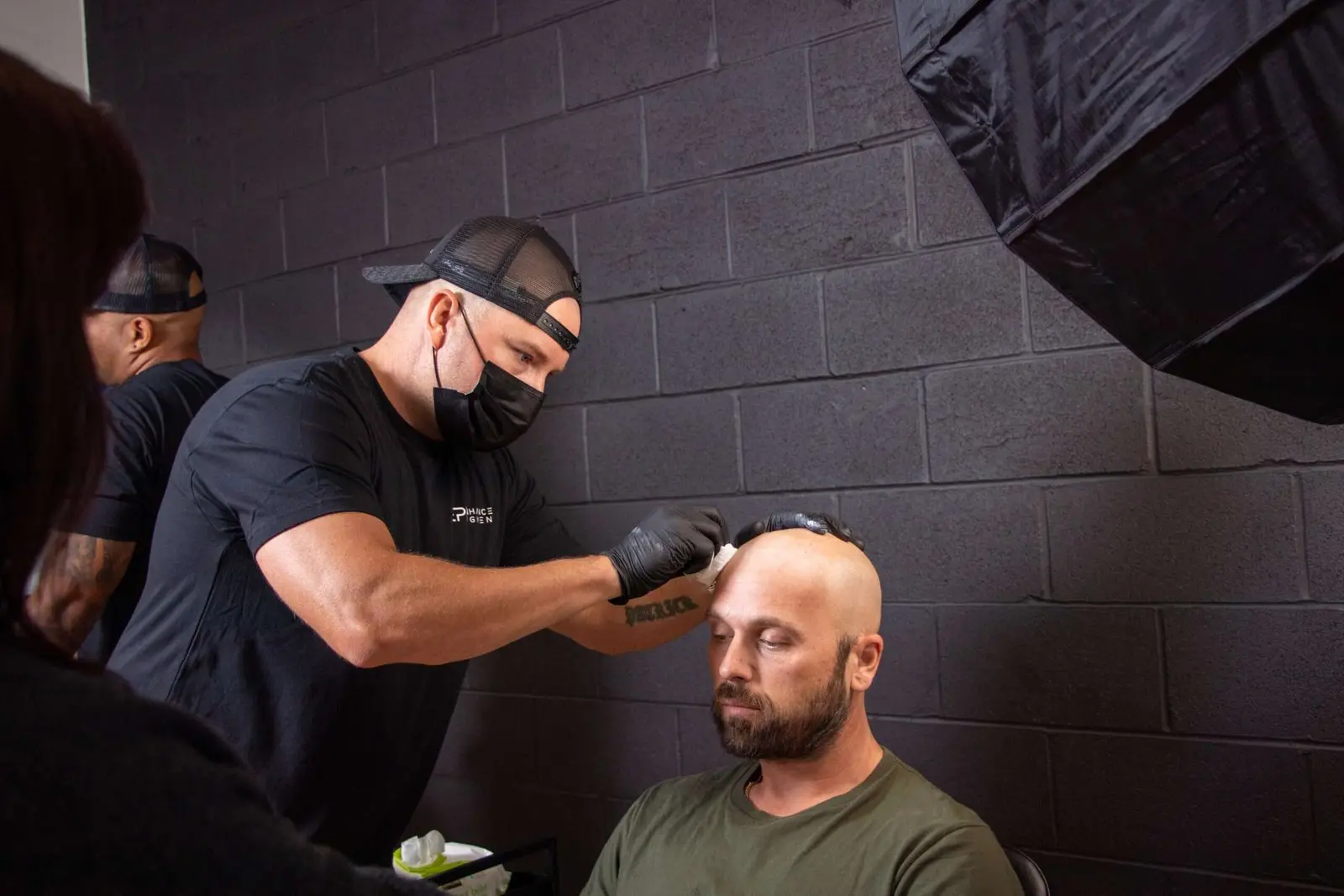
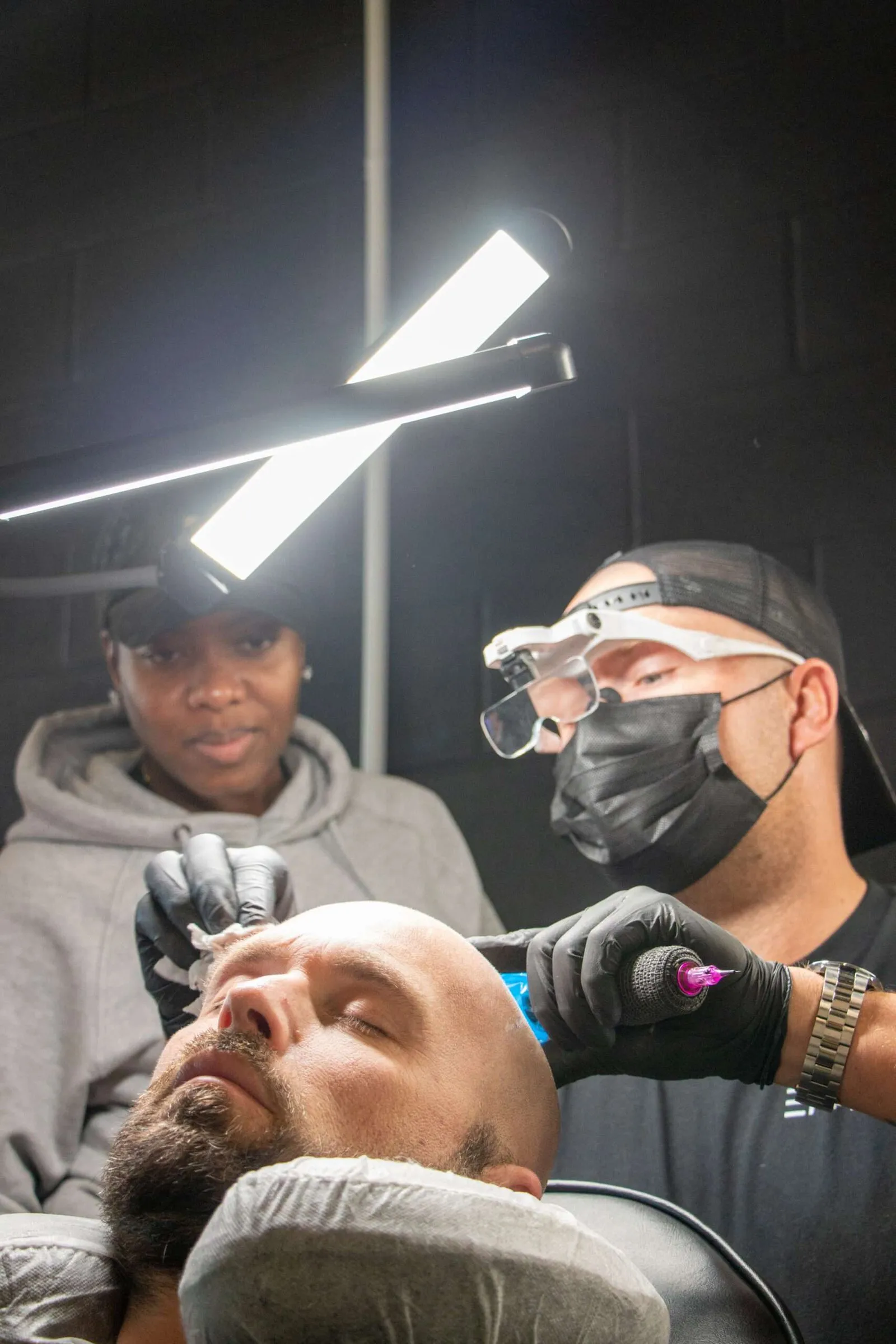
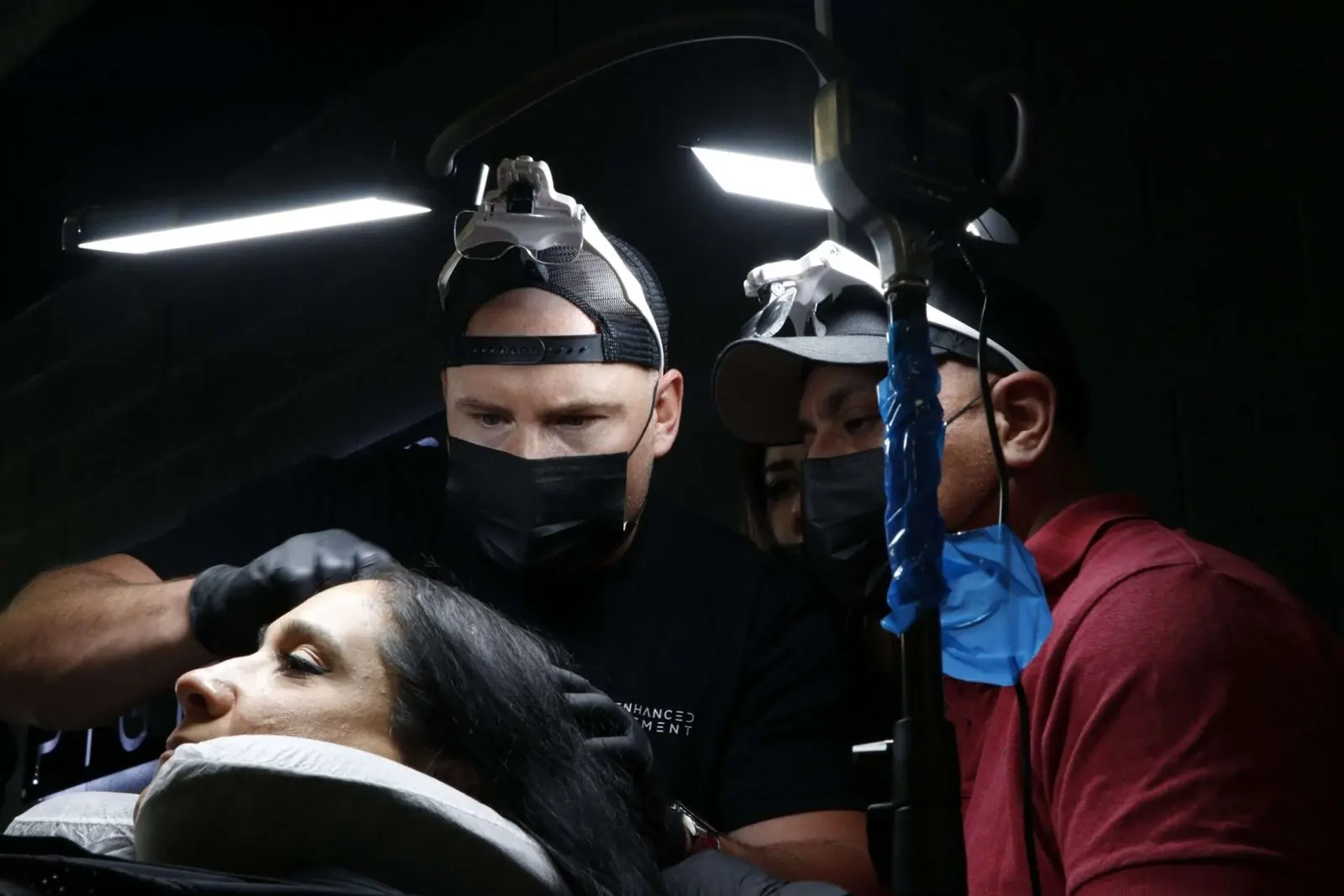
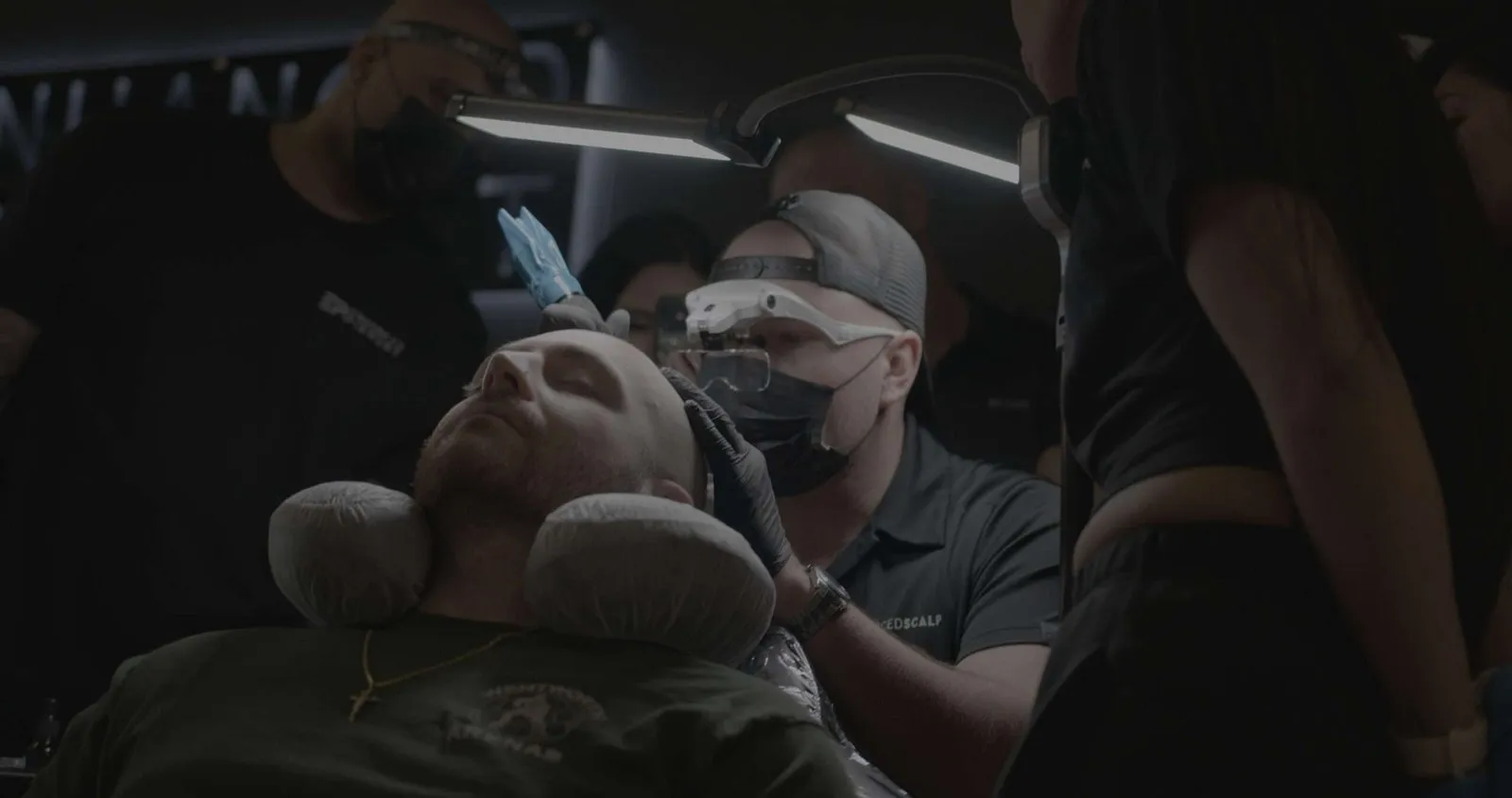
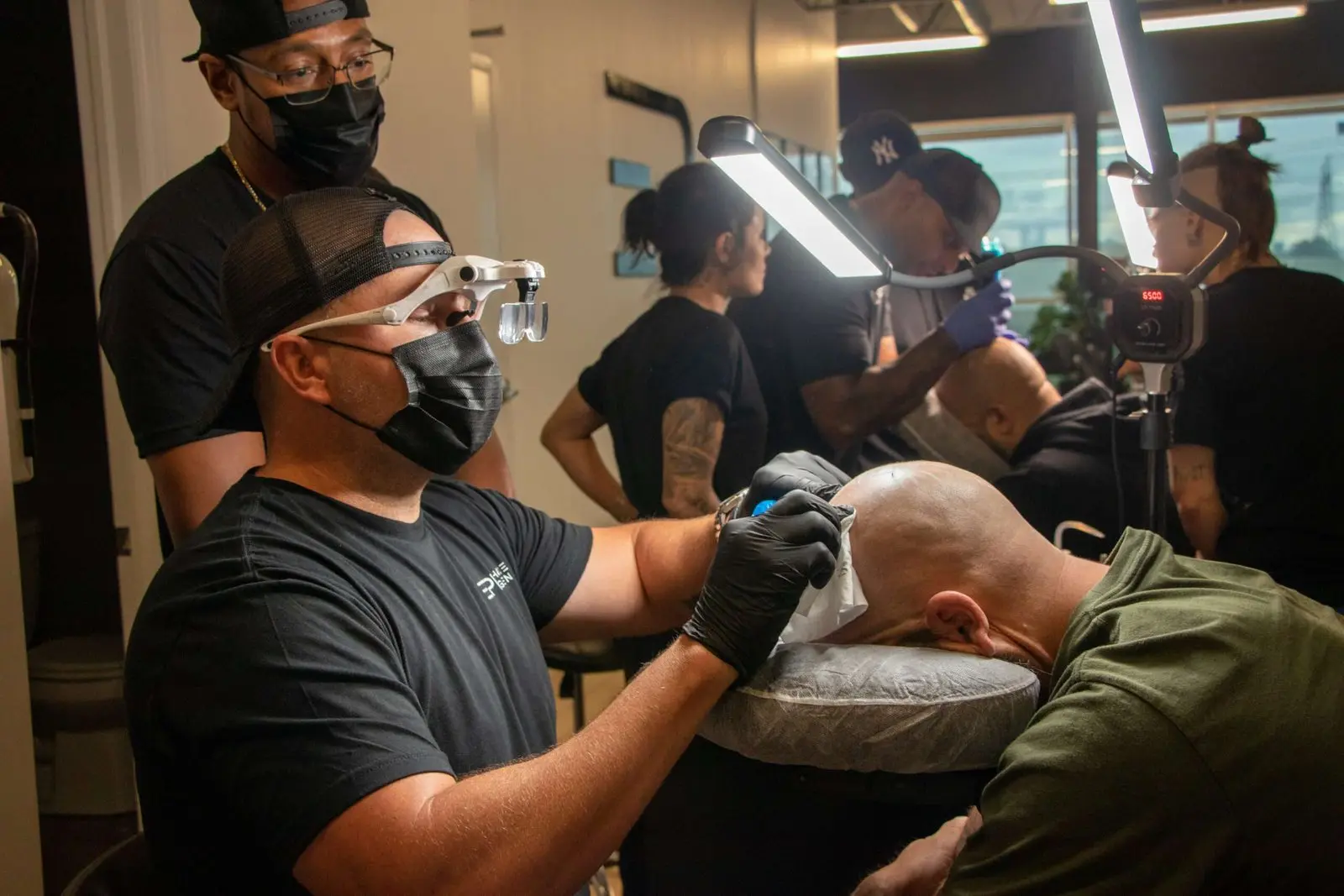
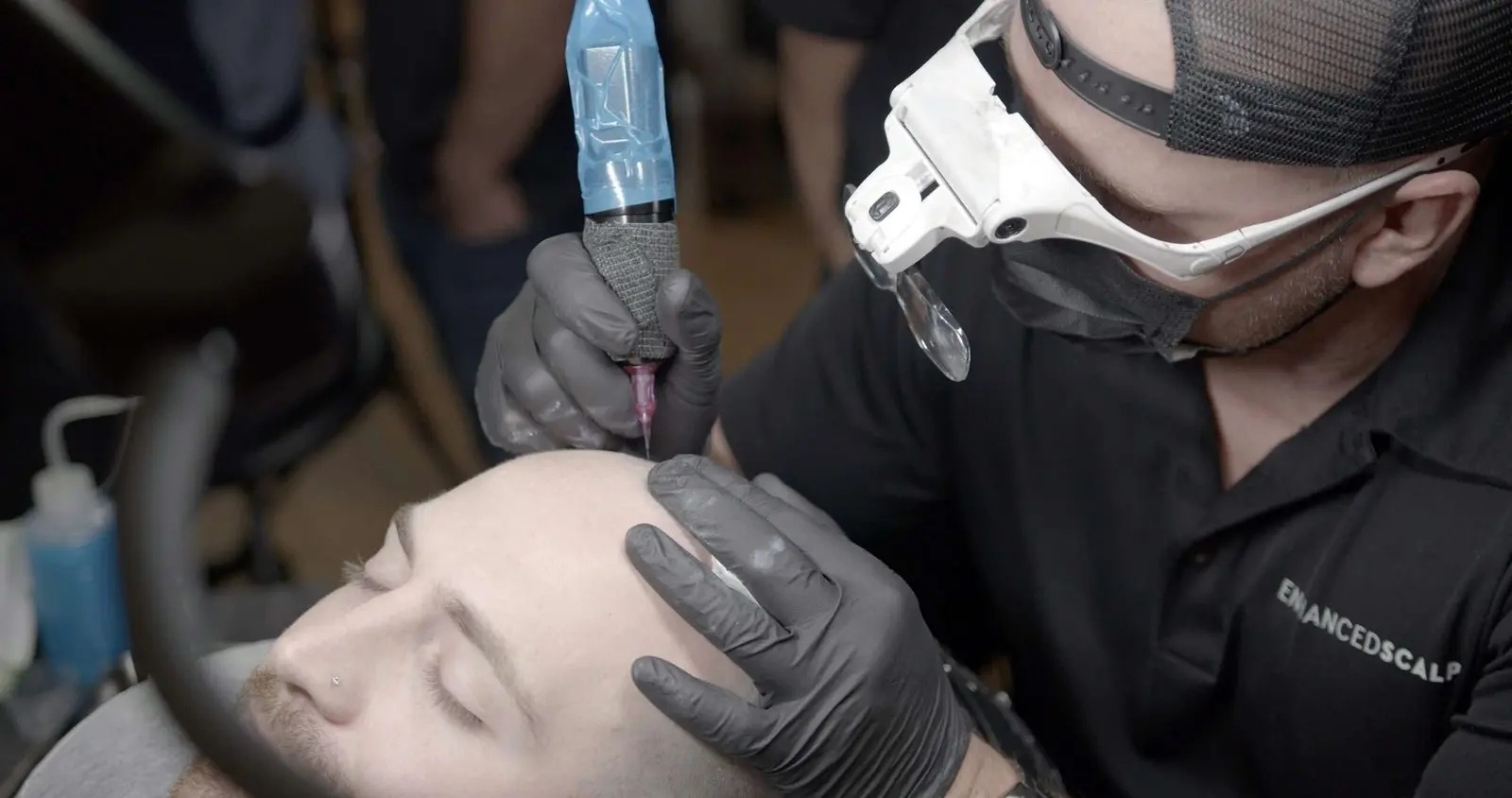
Session 1 lays the foundation: the hairline is drawn and a soft first layer goes across the area.
How scar camouflage works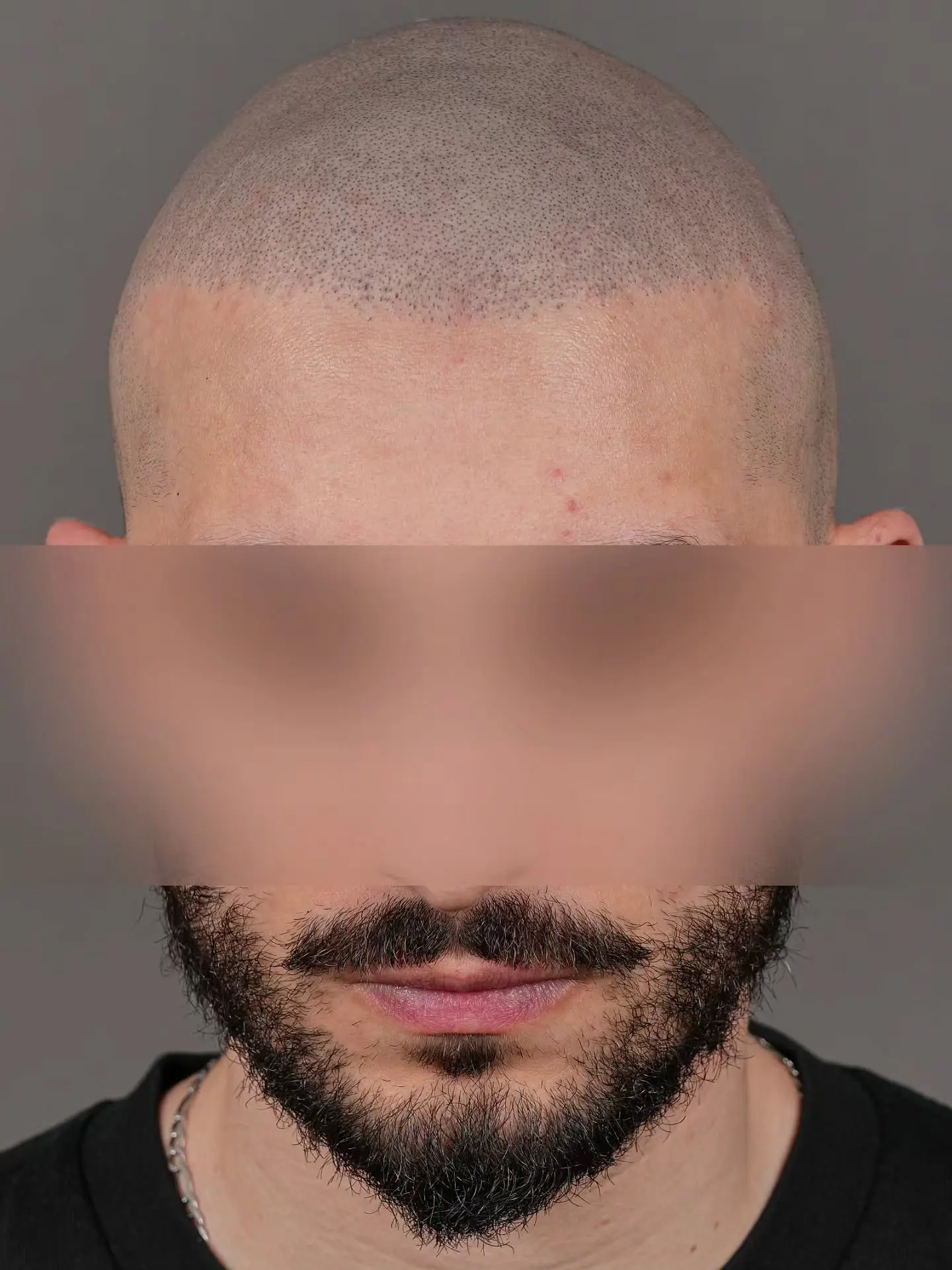
In James's words
Client in his late 20s
History of ~4000 FUE grafts
This is a first session — a foundational layer only.
Hair transplants, especially at this graft count, create scar tissue in both the recipient and donor areas.
Each graft extraction and insertion leaves behind micro scarring that alters the skin’s texture, elasticity, and pigment retention.
What that means in SMP:
The skin does not behave like untouched skin
Pigment uptake is less predictable
Density must be built slowly and strategically
Overworking this type of skin leads to poor healing and unnatural results
This is why session one is intentionally lighter and spaced.
You may see areas that look softer or slightly uneven — that is by design.
At this stage, the goal is to map, test retention, and establish a natural base.
Over the next sessions:
Density will be carefully layered
Scarred areas will be blended gradually
The overall look will tighten and soften as it heals
Fresh impressions will appear darker and more defined.
As the skin settles, everything will lighten and integrate.
No filters. No editing. Studio lighting.
This is real SMP — built properly, over time.
Posted on Instagram on April 18, 2026
Written by
James Christopher
8 more from this post
Each print opens full screen.