Case No. 428
Every scalp is different, and that changes everything
Scar camouflage and density on the scalp chart
At the consultation, James sketches the area he will treat on a chart like this one.
Healed work, after every layer has settled into one tone.
How scar camouflage worksIn James's words
Skin thickness, oil production, dryness, scar tissue, sun damage, fibrosis, sensitivity and previous procedures all affect how pigment enters the skin and how it heals.
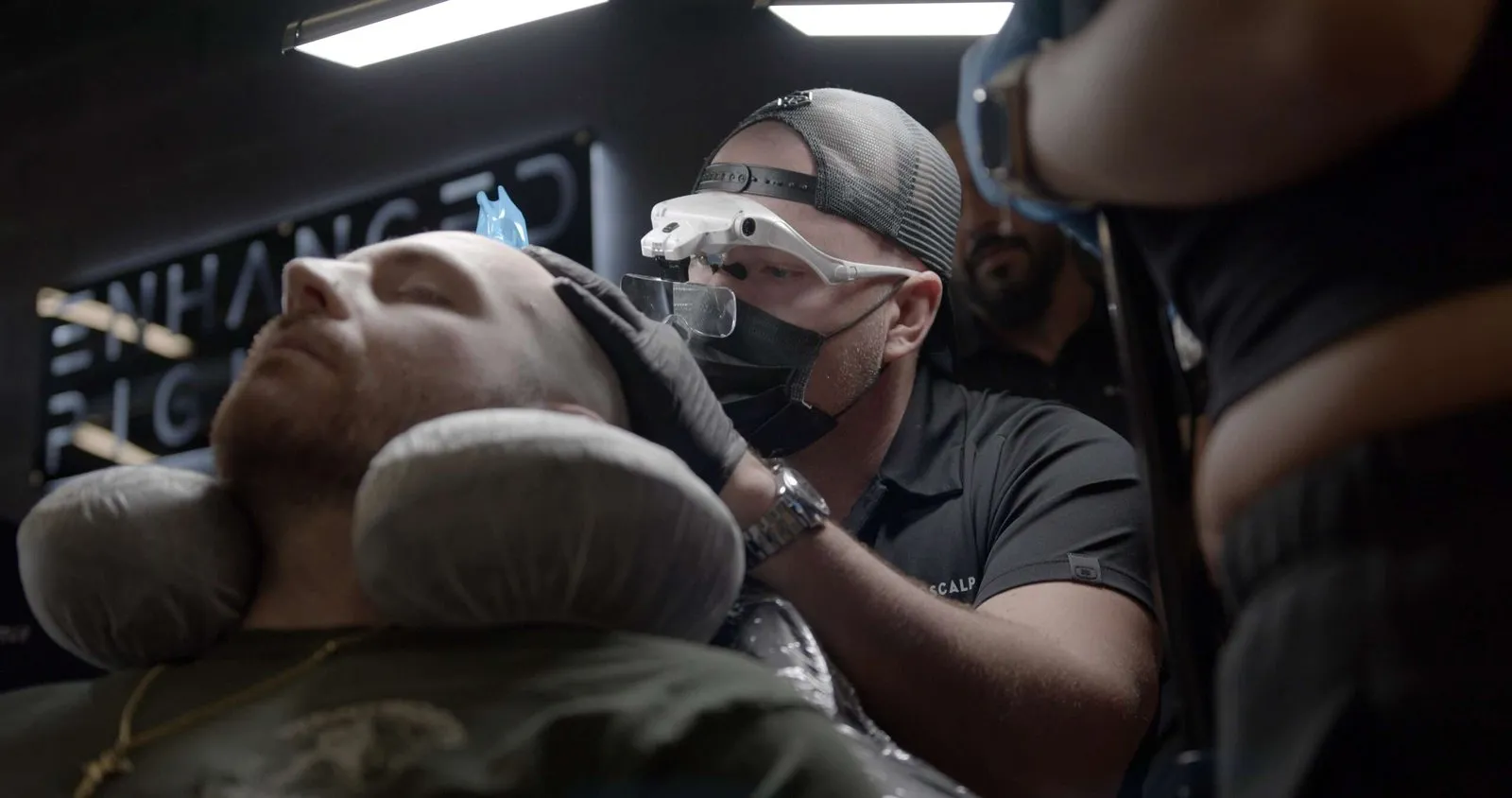
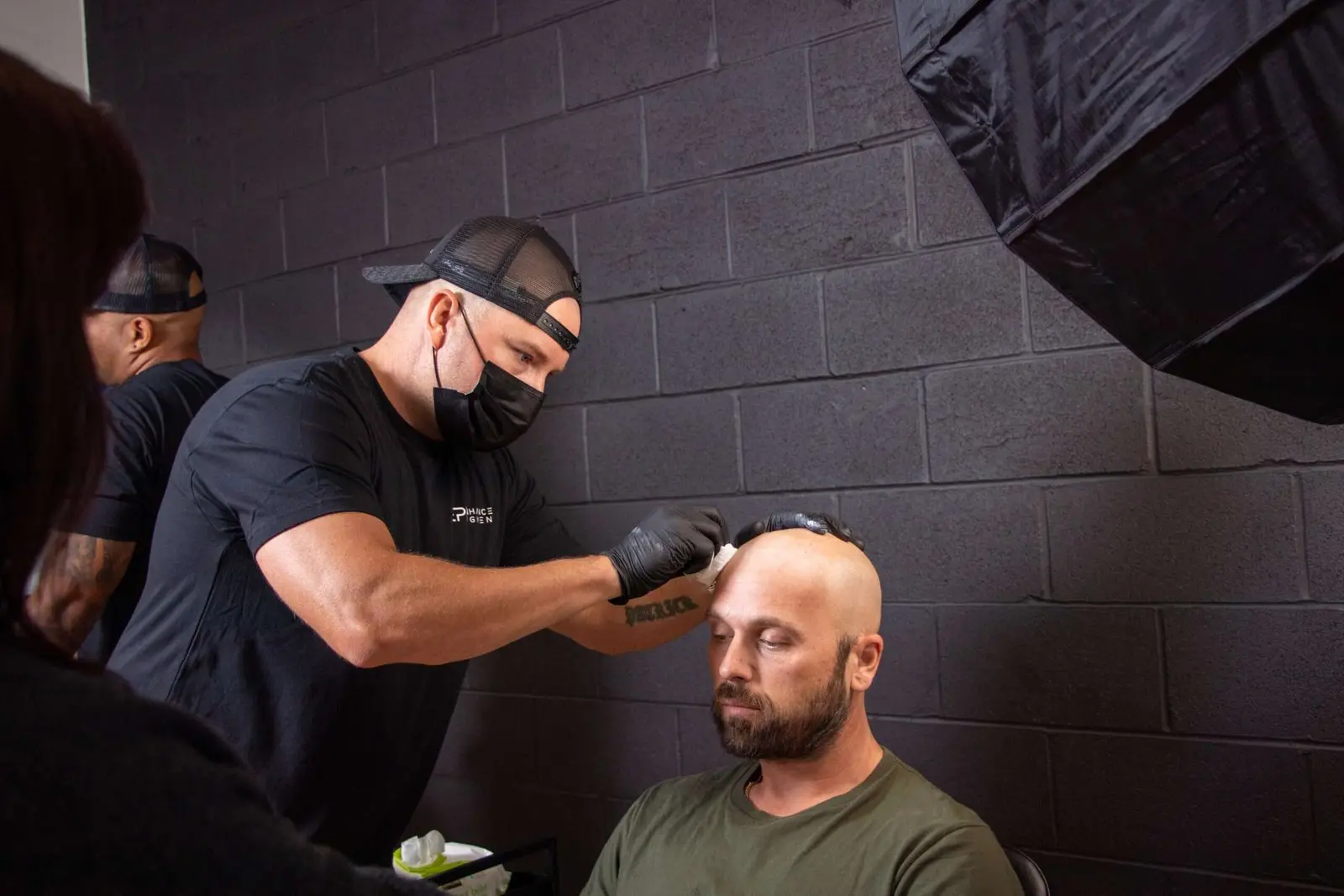
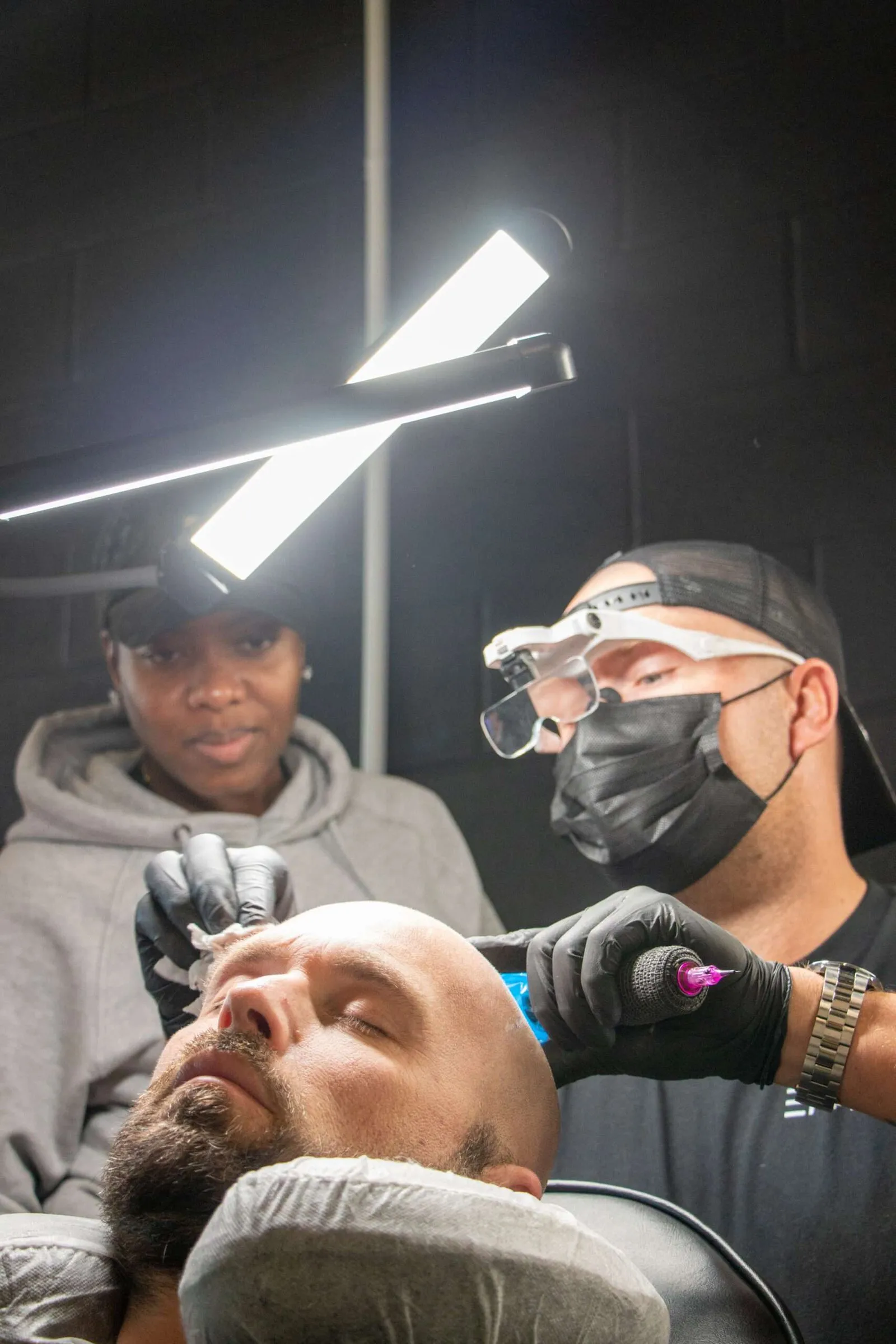
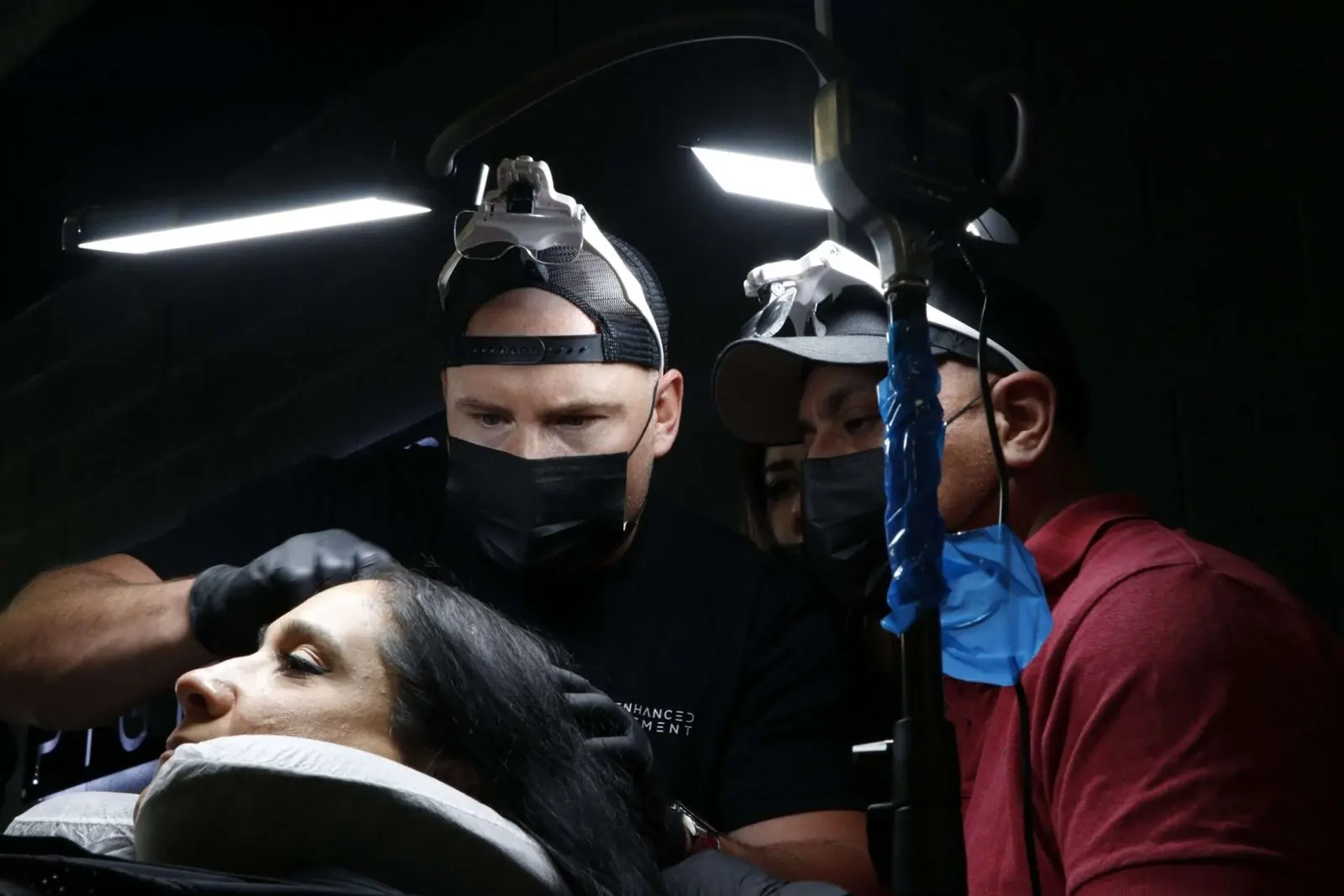
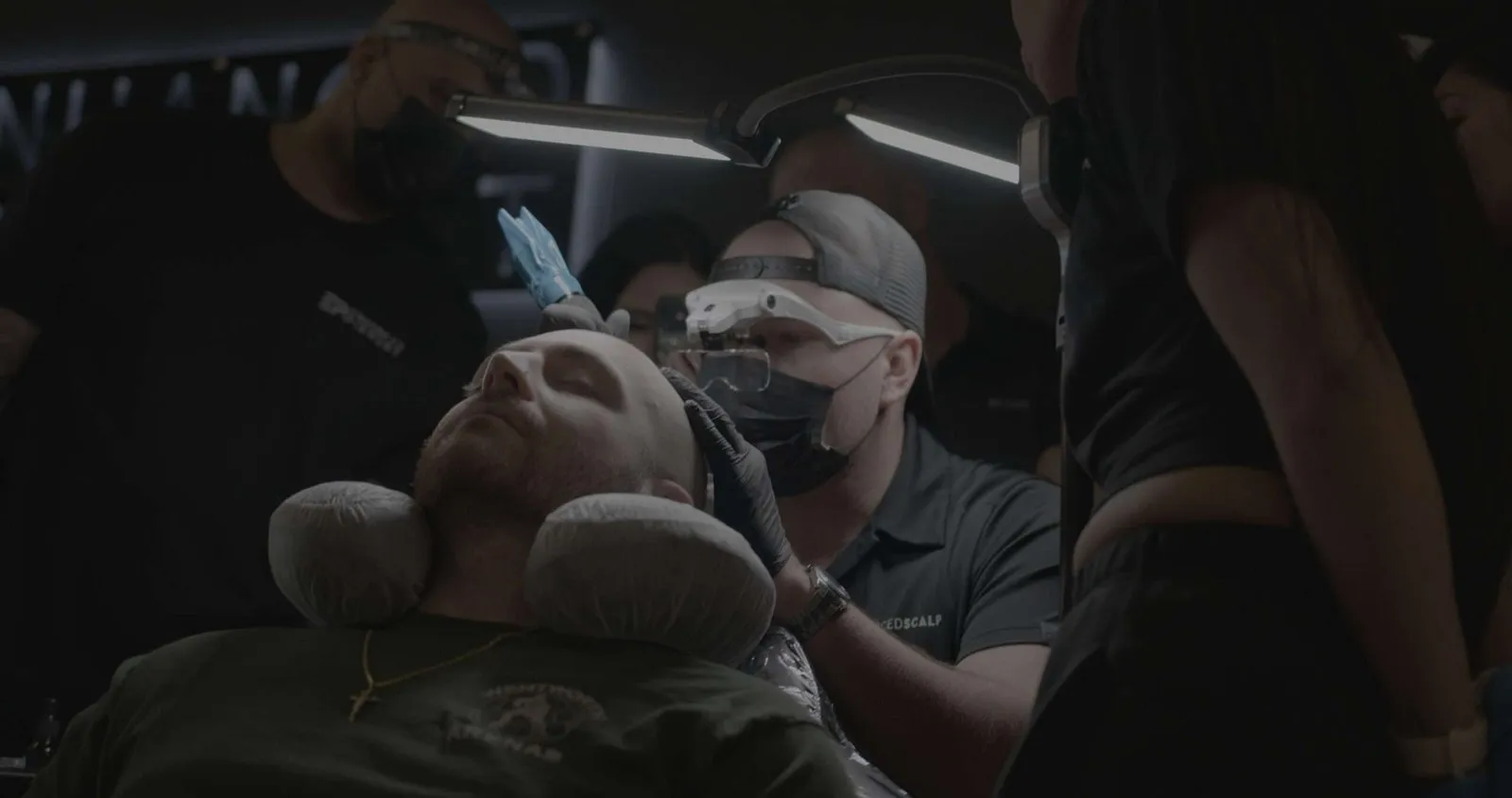
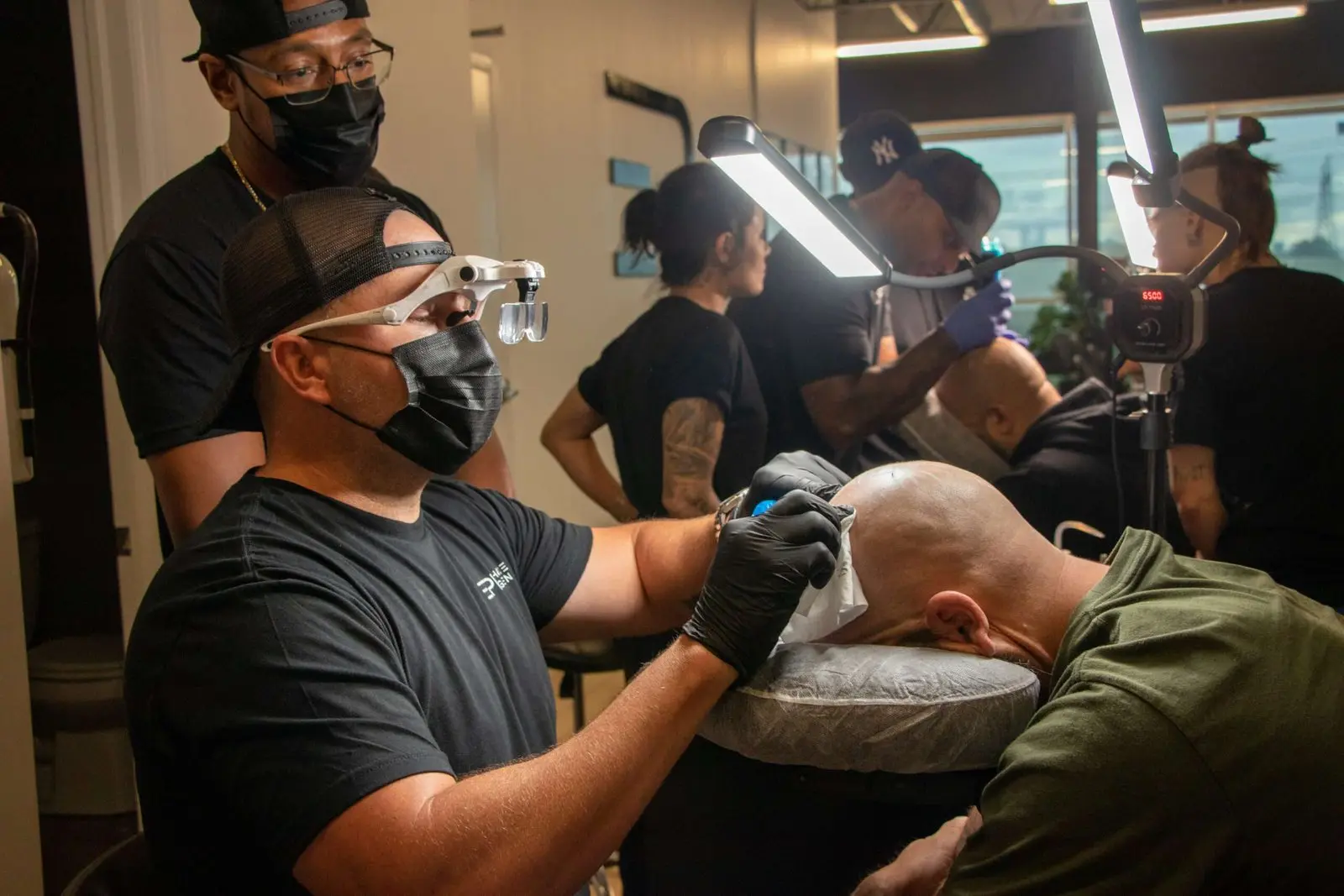
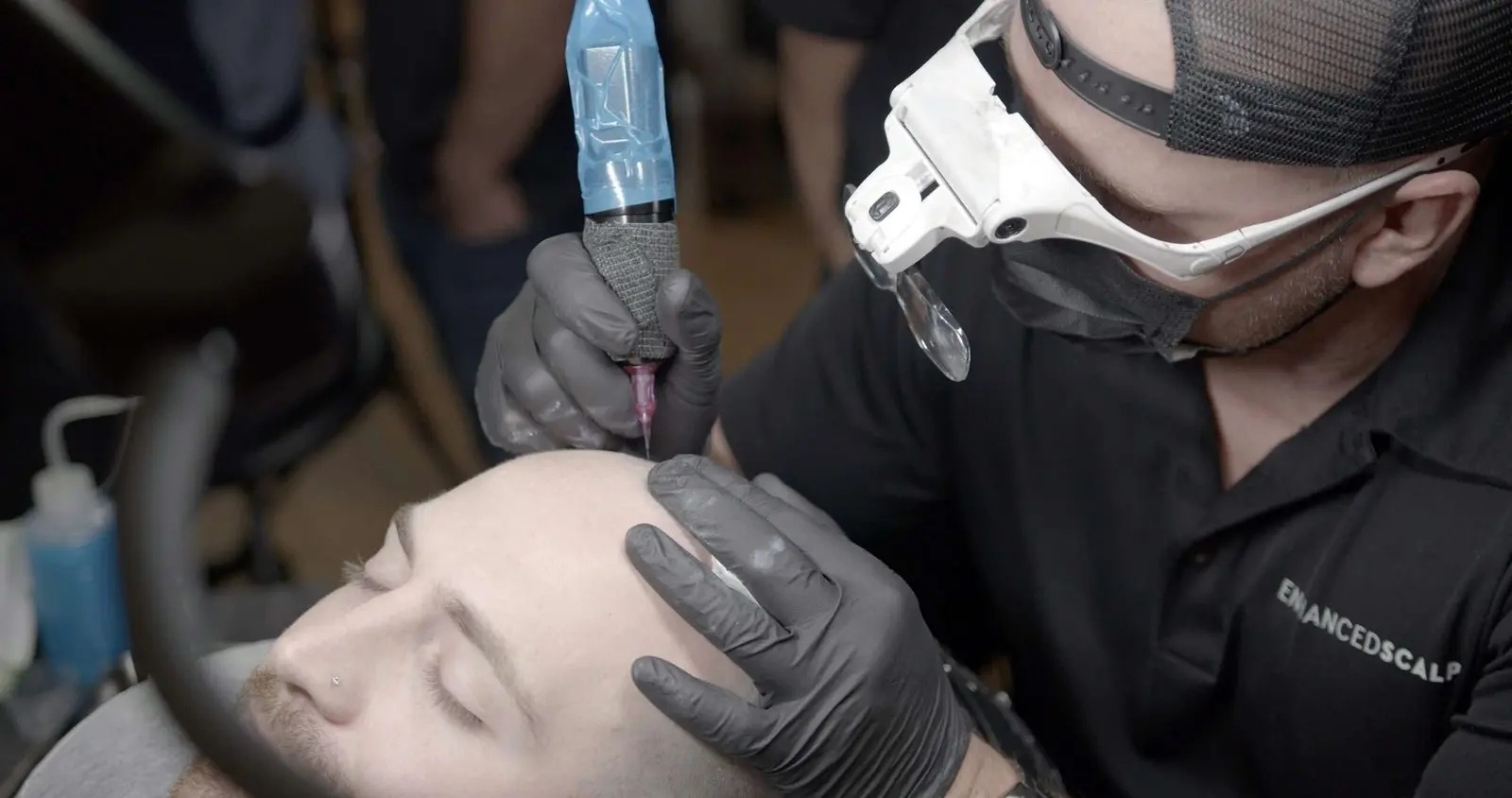
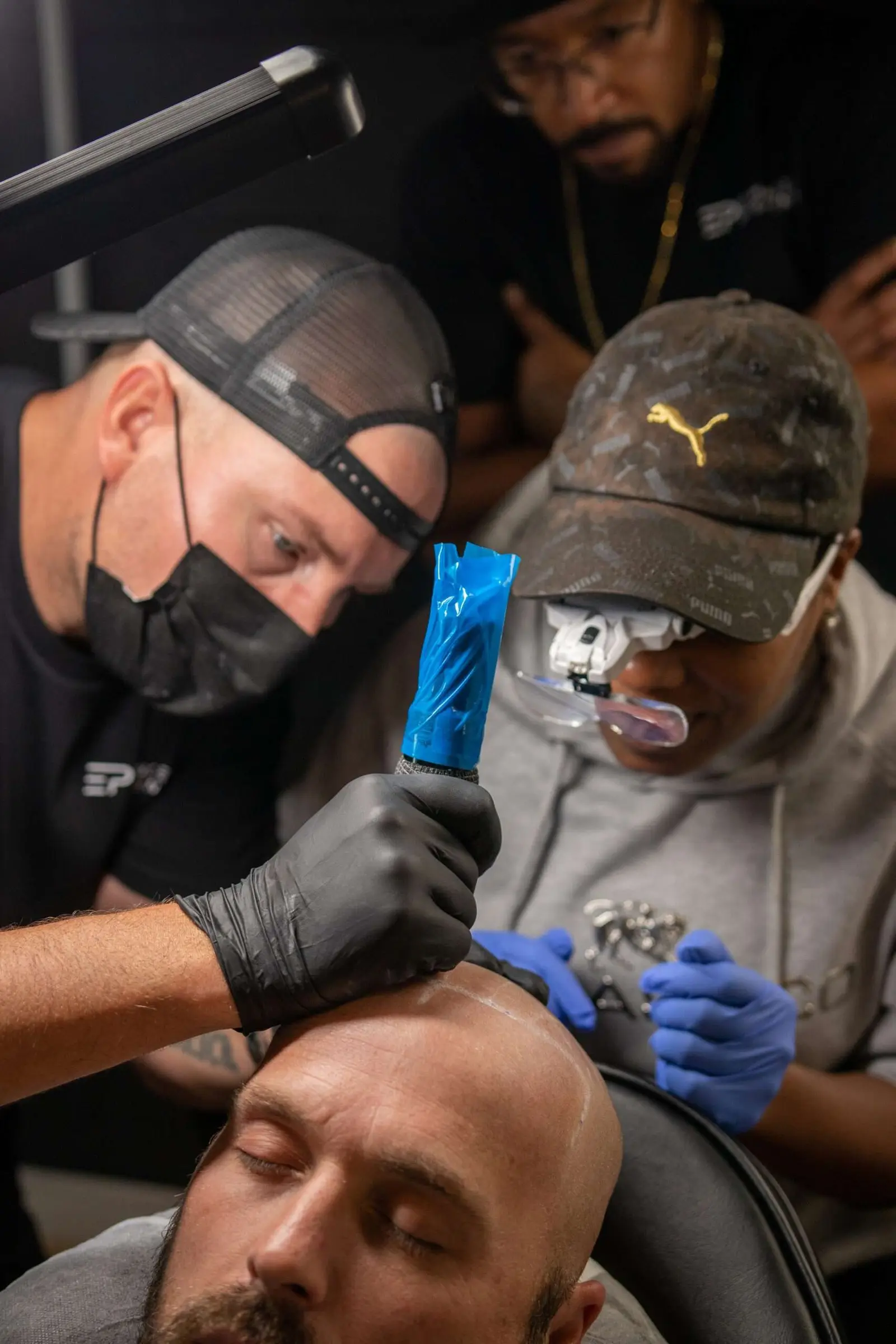
This client is a perfect example. Years of significant sun exposure left his scalp rough, fibrotic and extremely sensitive. After each session, the area becomes noticeably red, swollen and inflamed before settling over roughly 48 hours.
That means you cannot treat this scalp the same way you would treat healthy, supple skin.
You slow down. You adjust your pressure, depth, spacing and density. You watch the tissue continuously. You allow it to heal between sessions. And most importantly, you know when to stop.
That is why SMP should never be treated like a cookie cutter procedure.
And this is where I think the industry needs far more transparency.
Around the world, potential clients are being shown work under perfect shadows, heavy contrast, blurred skin, selective lighting and increasingly, AI-enhanced imagery. Sometimes the skin texture disappears completely.
That may create an impressive image, but it does not help a client understand what real SMP actually looks like.
I would rather show the redness. The texture. The difficult skin. The healed work. The imperfections of real human skin.
Because if the treatment is good, we shouldn’t have to hide it.
Real scalp. Real lighting. Real texture. Real results.
That should be the standard.
Posted on Instagram on September 25, 2026
Written by
James Christopher