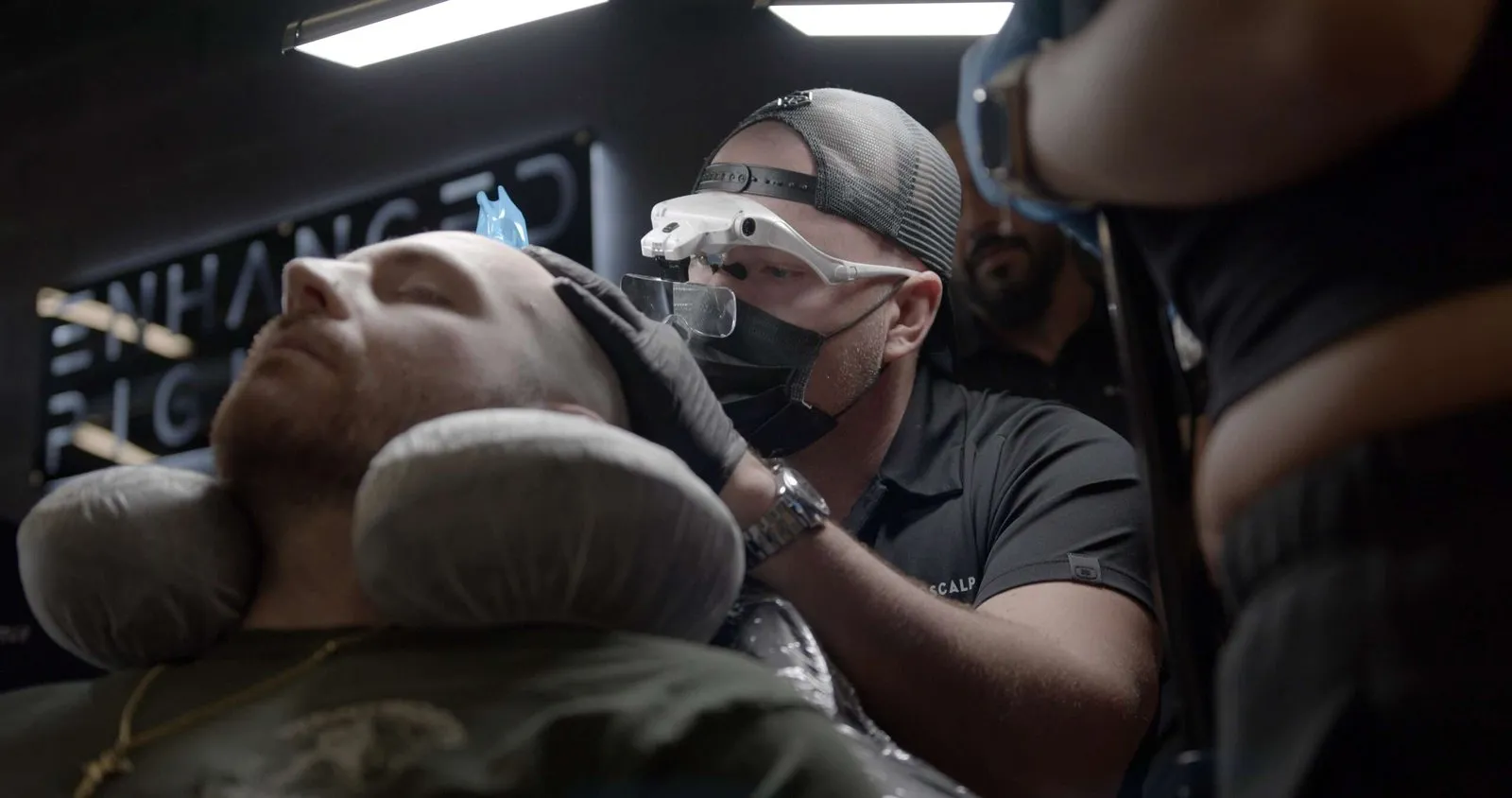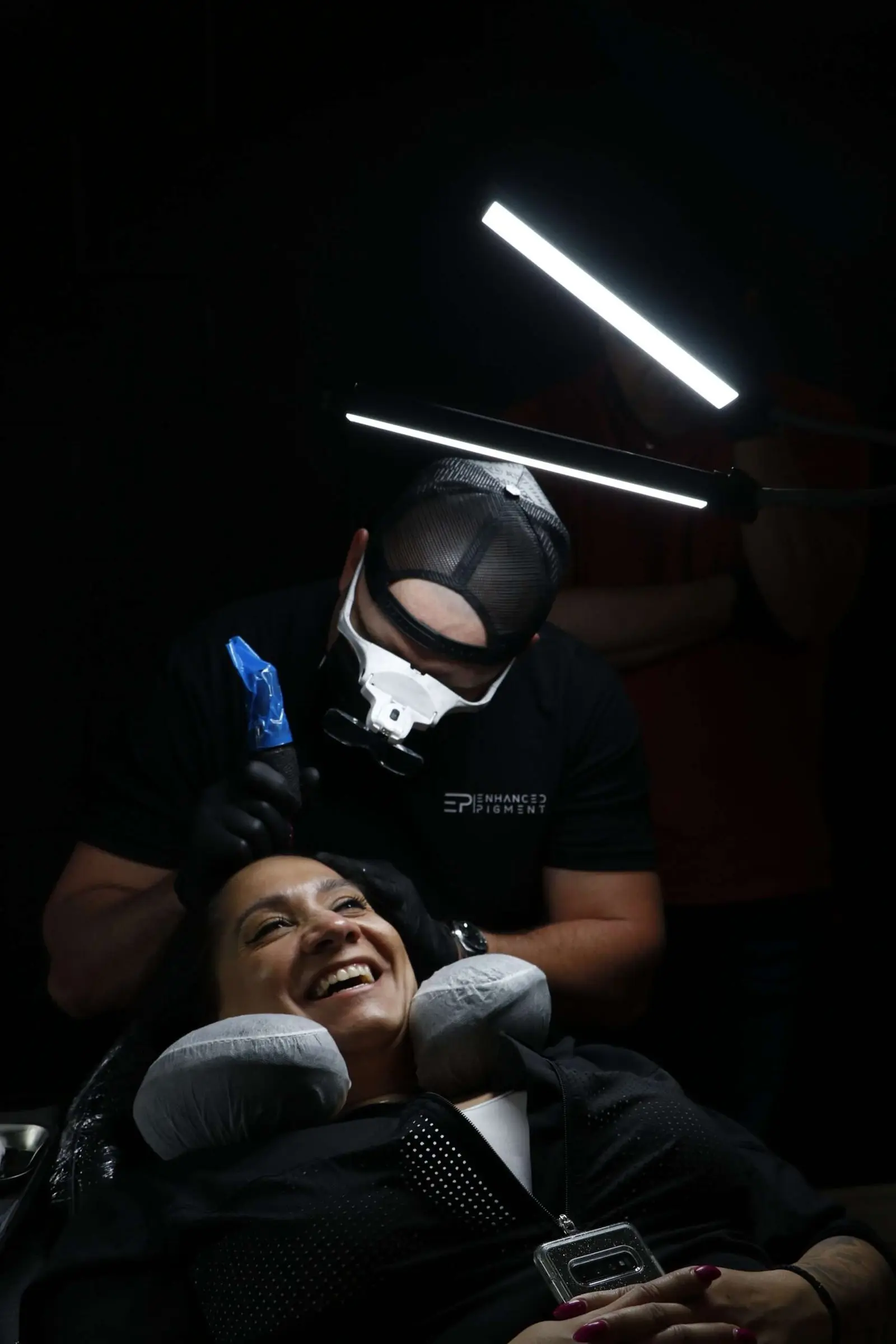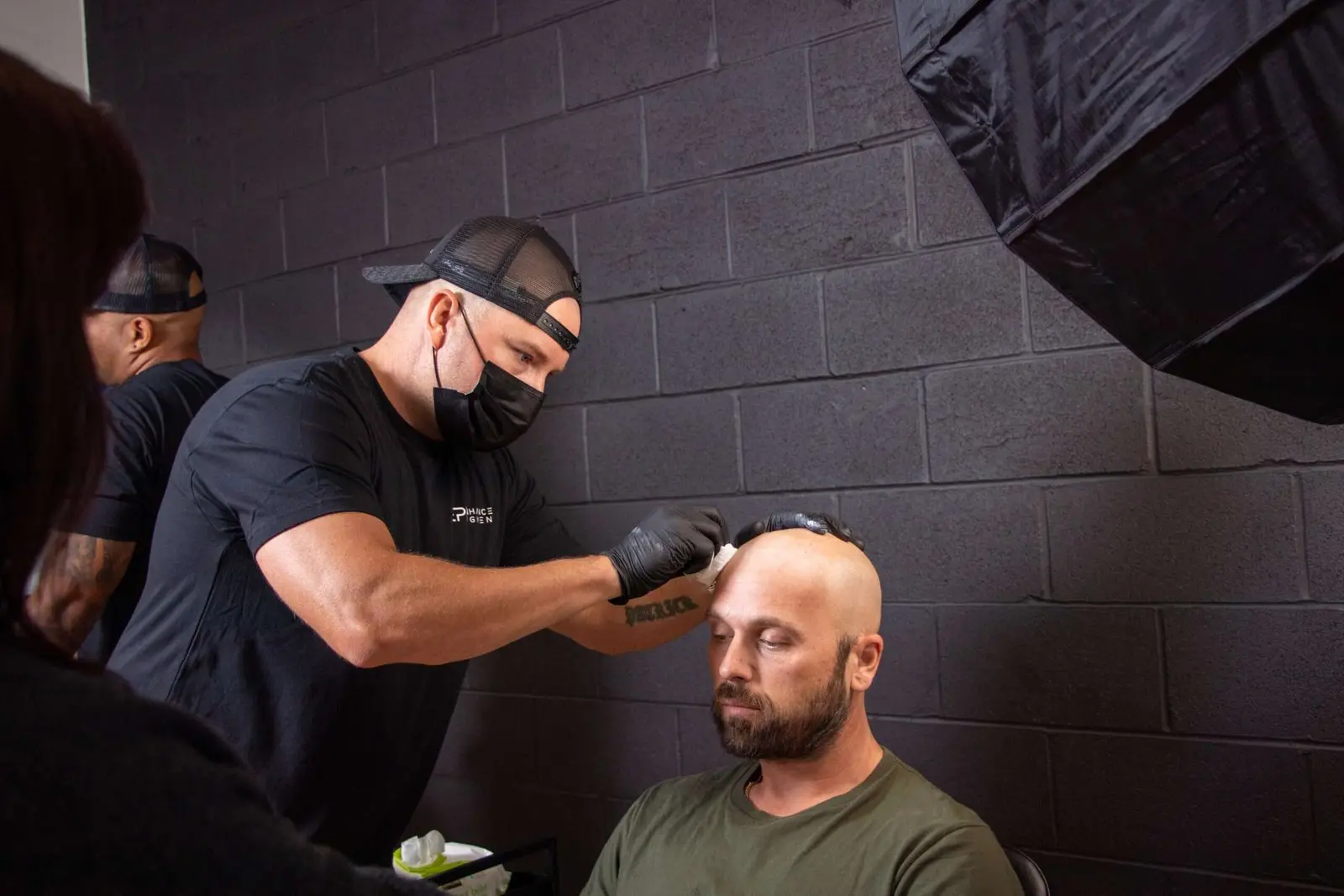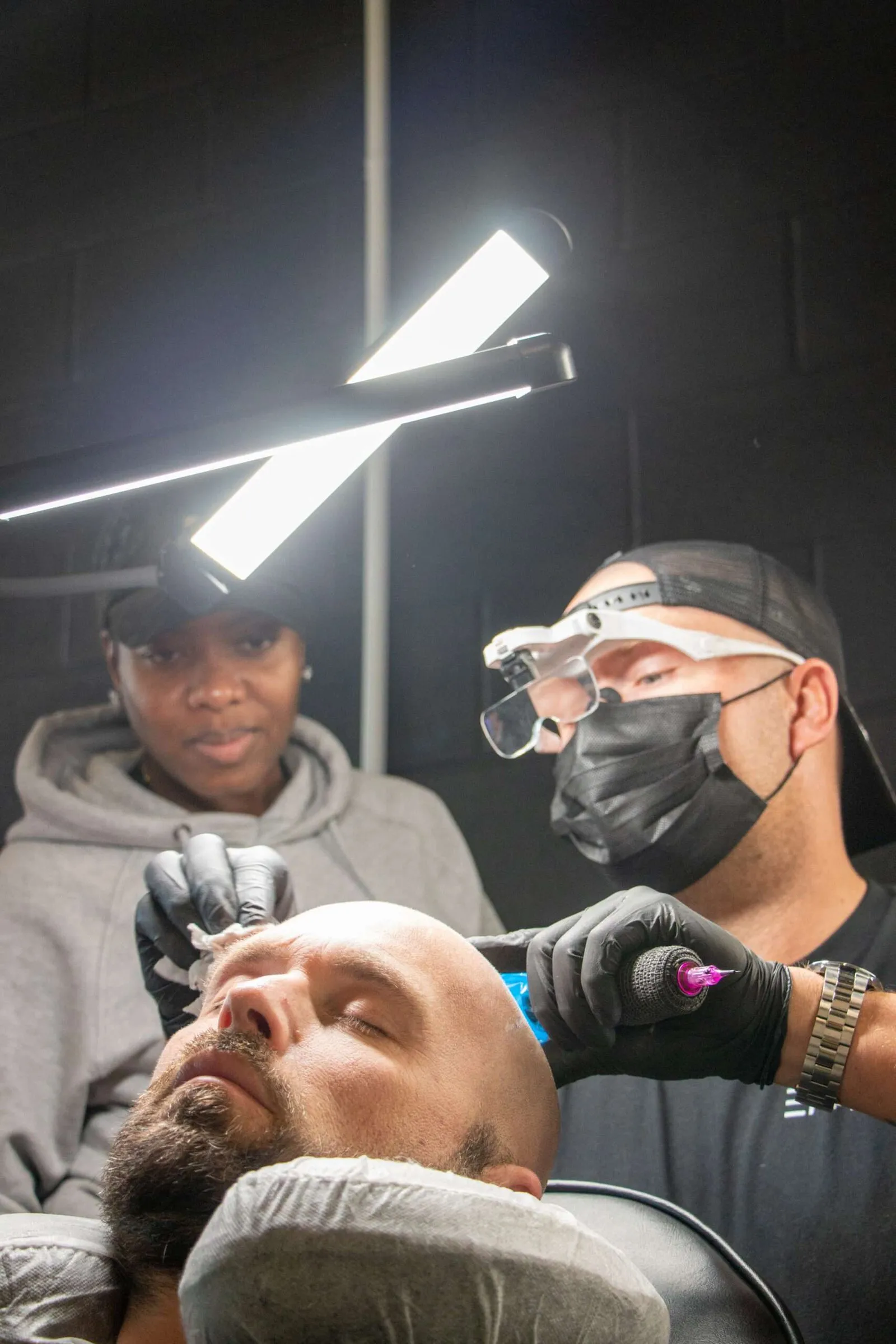
Case No. 430
Six months ago, this client came to me after a hair transplant that had…
Correction, scar camouflage and transplant repair on the scalp chart
At the consultation, James sketches the area he will treat on a chart like this one.
Healed work, after every layer has settled into one tone.
How corrective SMP works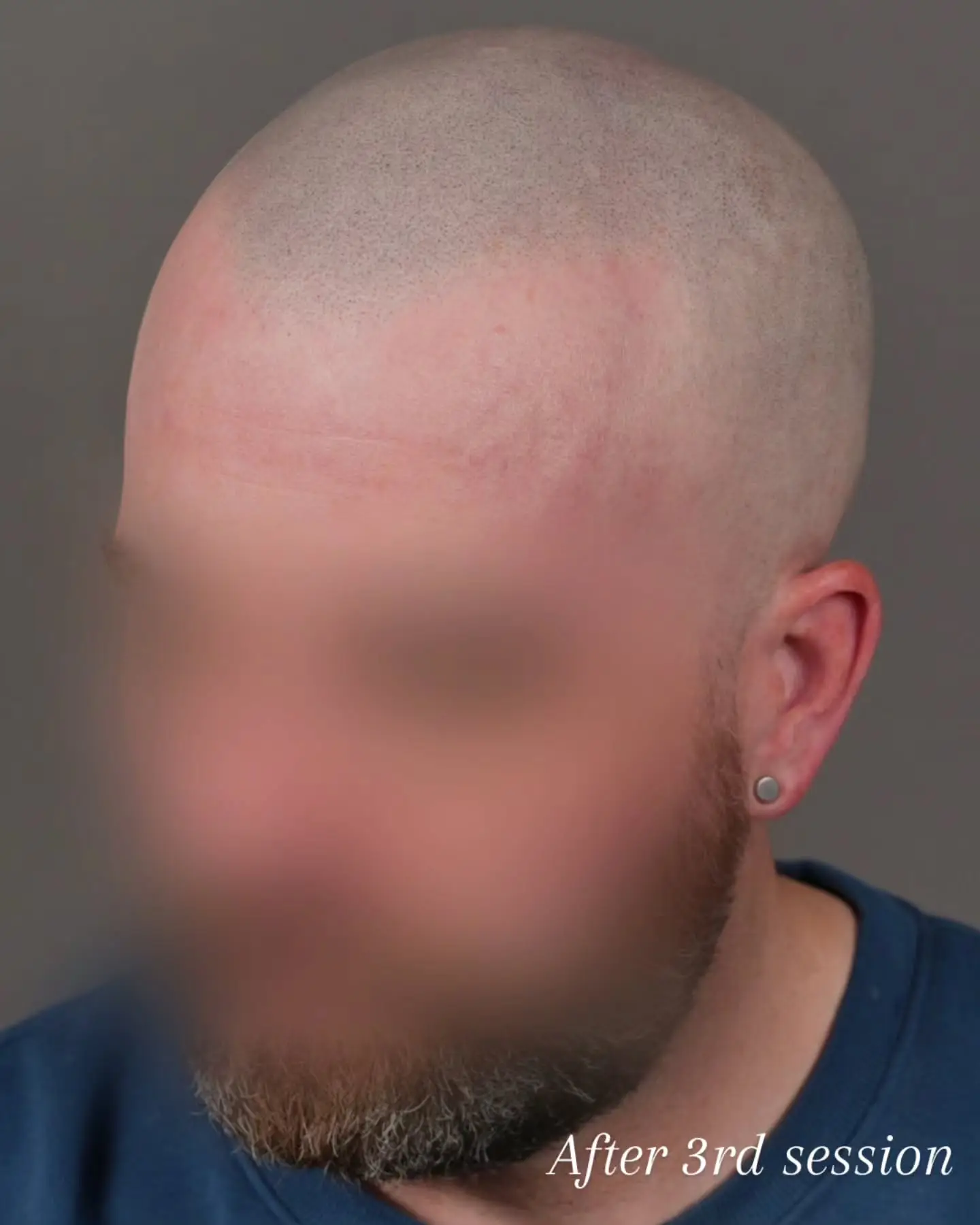
In James's words
At that point, the objective changed. We were no longer trying to preserve the appearance of longer hair. We shaved everything down, assessed the scalp properly, and built a treatment plan around what was actually there.
The job was twofold: create a believable shaved look across the scalp and soften the visual impact of the transplant scars without making the SMP itself obvious.
This carousel shows the full timeline.
You’ll see him before shaving, the donor scarring once the hair was removed, the fresh third-session result, and then the healed work photographed under completely different lighting conditions.
That last part is important.
SMP can look dramatically different depending on the light source, direction, exposure, camera, angle, and whether the work is fresh or healed. Bright outdoor daylight will usually expose more skin texture and make the treatment read softer. Indoor directional lighting can make the same healed result look considerably darker and denser.
That does not mean the treatment changed. The lighting changed.
This is why I have always believed SMP should be documented from multiple angles, in multiple environments, and after it has healed. One perfectly controlled photo is not enough to properly judge this work.
The first image was taken outside in strong natural daylight. No attempt to hide texture, soften the scalp, or manufacture density. The other healed images show how differently the exact same treatment can present indoors.
Fresh results are useful for documenting technique. Healed results tell you whether the technique actually worked.
And with hair-transplant repair, the assessment has to go beyond the top of the scalp. You are dealing with existing grafts, altered follicle patterns, donor extraction, scar tissue, skin quality, and the possibility of continued hair loss. SMP has to integrate with all of it.
The objective is not to make the scalp look tattooed.
I#scalpmicropigmentation
Posted on Instagram on September 25, 2026
Written by
James Christopher
6 more from this post
Each print opens full screen.